Showing posts with label Bristol. Show all posts

Monday, 16 June 2014

Review: Impey - Bangclap / 4titude [S7S002]


It may be too early to call, but with Boofy and Lemzly Dale in no rush to balance out the quality with quantity, Sector 7 Sounds could soon have themselves established as a bag-on-sight imprint. It's been a little wait since the label's acerbic debut, but "worth it" doesn't quite do 002 justice. Those who've had their ear to the grimey ground should already be well aware of lead track 'Bangclap', which boasts a string line that, in other, lazier hands, might have ended life wasted on a Lex-Luger-by-numbers trap beat. Impey's variations are subtle, allowing the emotive topline to retain its catchiness without slipping into the boredom of an overworked loop. This delicate sense of balance transfers also to the careful plumbing of grime's heyday - when the aggression of tunes such 'POW!' was valued as equally as the emotive likes of Ruff Sqwad's 'Together' - in, for instance, the tune's pitch-bent vocal snips. The balance of course noted in the fact that, listening to the record, you don't find yourself reaching halfway through for a tune made nearly ten years ago: 'Bangclap' avoids any cynical nostalgia because it's not a sonic palette that it borrows from so much as an emotive one, invoking something of the energy and feeling that made and, in certain examples such as this release, continues to make grime such an enthralling sound.

To say that the B-side is more of the same would usually make for a nicely back-handed compliment, however when the A- is this good, and the producer this young, it can serve as nothing less than a congratulatory handshake. More brooding than 'Bangclap', and making more of the space between scattered claps and broken drum rolls, '4titude' peddles a similarly astute sense of control and balance and, in the aforementioned use of space, feels more inviting to an MC. Yet with something of a drought - unless you're in Manchester, that is - of really good new MCs in grime, it seems '4titude' will be allowed to revel celebrated as an instrumental cut in its own for a good while longer at least.


Impey - Bangclap


Impey - 4titude


Impey - Bangclap / 4titude [S7S002] is out now on Sector 7 Sounds, and available directly from the BigCartel store.

W.

Monday, 24 March 2014

Top Ten: DjRum picks out ten of the best from Bristol


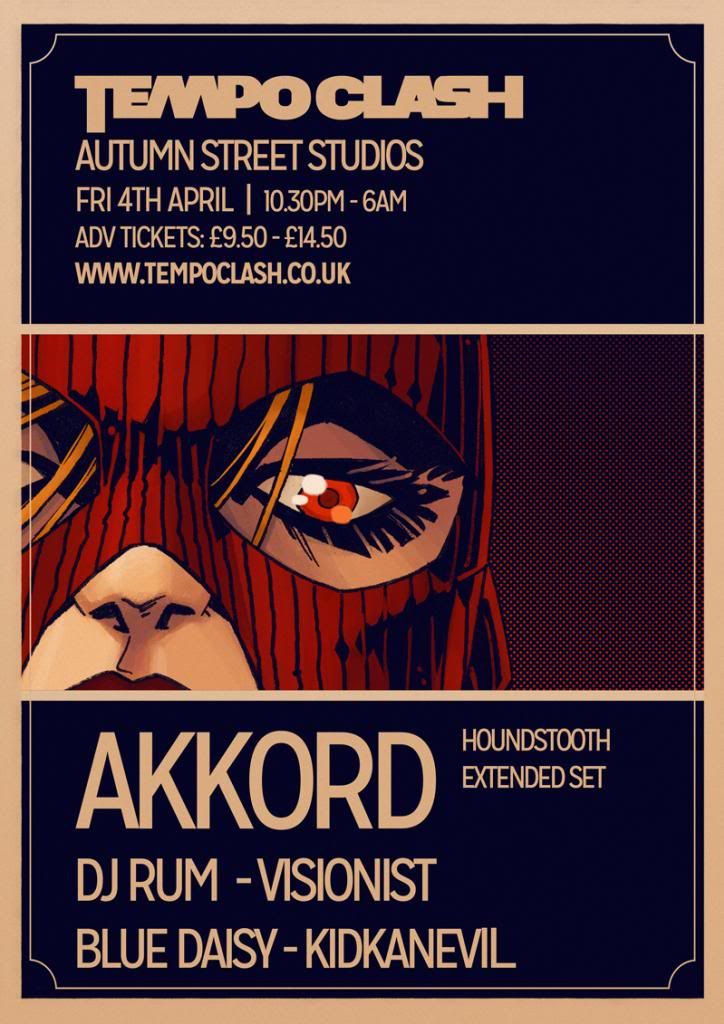
DjRum completes a sturdy lineup for Tempo Clash which features an extended set from Hedmuk favourites Akkord, as well as appearances from Visionist, the inimitable Tempo Clash residents - Blue Daisy and Kidkanevil - and the broken barrier stylings of  Filter Dread, with Luke Benjamin lurking around the mic stand. The event will take place at London's Autumn Street Studios, and advance tickets are available from www.tempoclash.co.uk.

In the run-up to the night we got in touch with DjRum to take us through some of his favourite records to have emerged from his hometown of Bristol, and the results are as varied and interesting as could be expected from a producer known for his wide-ranging sample library and cross-genre approach to making music.

Hedmuk: Bristol is a place with a rich musical history, and there's a broad sphere of influence that's extended out from the city too. It's probably no simple task to pick a list of just ten, but are there Bristolian records that you would say have had a particularly strong personal influence on your own music?

DjRum: There are so many great records that have come out of Bristol: props to Phaeleh, Addison Groove, Massive Attack, Kahn, Mensah, Smith & Mighty, Tricky, Breakbeat Era... the list goes on. A few of my tracks could have been on this list too. I actually did the mixdowns for a few tunes off Seven Lies at Phaeleh's studio in Bristol, and I did the mixdown for my remix of Phaeleh's 'The Cold In You' down there too. So although all those tracks were made in London, in a way they did come out of Bristol! But here are the top 10 records to come out of Bristol that I would say have influenced me the most...


1. Portishead - Dummy


One of the finest albums ever made, let alone Bristol's finest. Every track has been my favourite track on the record at some time or other. I want to pick out one second from 'It Could Be Sweet' as a highlight, though: the crucial moment in this track for me is at 3:25, when you hear the smacking of lips, an intake of breath and a sigh. This little moment has been a real influence on my production. I had listened to the record over so many times before someone pointed this bit out to me. Now I wait for it every time I hear the track. It's a very deliberately chosen moment of accident: the producer, Geoff Barrows, has increased the volume of the sound to the same as the rest of the vocals, making it feel closer, more personal. There's something very intimate about a quiet breath at such high volume. With loud beats and bass sounding out, you could only hear someone's breathing like this if you were cheek to cheek. It brings you right up close to the music. There are lots of moments that make this album special: the first snare of 'Biscuit', the breakdown of 'Strangers', the drum roll in Mysterons; but the thing that has really stayed with me is that one moment in 'It Could Be Sweet'.

2. Pinch - Qawwalli


When I first heard this tune on Mary Anne Hobbs' Dubstep Warz show in 2006 it completely blew me away. It was unlike anything that was around at the time. After two hours of forward-thinking bass music, this totally stole the show.

3. DJ Krust - Burnin'


This track is a lesson in progression. The movement from one idea to the next is so simple, but totally draws you in. The pads at the beginning and middle are the perfect balance of mysterious and hopeful. Jungle music at it's finest - not to mention that it has 'Jazz Note' on the flip!

4. Monkey Steak - Grim Dubs: Vol. 1


I can't believe this is not up on Youtube, it's a seminal release. 'Crowsteppah' is phenomenal and it was a real game changer for me in 2005. It's an incredible deep mix of jungle and grime. One half of Monkey Steak, Atki 2, is from Bristol and is so underrated. He's one of these artists (like Boxcutter, Various Production, and Burial) who was making post-dubstep in '05, back when most people hadn't even got to grips with dubstep yet. Check Grim Dubs: Vol. 5 too.

5. Krust - One Moment (from Coded Language)


So many albums have token cinematic interludes in the middle, but this is much much more than that. Again there is a great progression: from the initial hopeful theme, into a darker more mysterious section (that sounds to me like it borrows quite heavily from Charles Ives' 'The Fourth Of July'), and then back again to the opening theme.

6. Björk - Venus As A Boy (from Debut)


Hey Björk's from Iceland, not Bristol! OK yeah, but this track (and most of Björk's debut album) was produced by Bristol boy Nellee Hooper. I love the way he's put this track together: the offbeat kick-drum is the work of a mad genius. There's loads of other great Nellee Hooper productions I could have chosen, Massive Attack and Soul 2 Soul come to mind, but I'll settle with this one today.

7. Roni Size - Hot Stuff (from the New Forms bonus disc)


Without doubt my favourite thing he's produced: it's really stood the test of time for me. The breakdown is so beautiful, I love the idea of having such a long ambient section with sine-wave bass stabs throughout it. This was the inspiration for the ambient section in my tune 'Mountains Pt. 3'

8. Peverelist - Salt Water


It's not often I get so excited about a new tune as I was when I first heard this one. The rhythm is incredible, I hear new complexities in it every time. This is Pev at his finest.

9. Appleblim & Peverelist - Soundboy's Ashes Get Hacked Up And Spat Out In Disgust EP


I'll never forget the reaction this got when I played this at Outlook Festival last year. After a sequence of hip-hop tunes, I brought the ambient intro of 'Over Here' in over the breakdown of a J-Live tune. The mood flipped from hyped up to deep down so nicely, everyone got straight into it. When the sub hits it's so understated, yet overwhelming. Amazing!

10. Limewax - Cracking Core (Technical Itch Remix)


I'm a huge Tech Itch fan; he's a very skilled producer, and he creates great cinematic atmospheres. There are loads of standout tracks from him: 'Pressure Drop', 'Implant', and the remix him and Dylan did of Photek's 'Baltimore' are all great. But this remix takes it for me: so powerful, so driving... infectious!

Catch DjRum playing alongside Akkord, Visionist, Blue Daisy, Kidkanevil, Filter Dread and Luke Benjamin on Friday the 4th April for Tempo Clash at Autumn Street Studios, London.

W.


Saturday, 30 November 2013

Featuring: Boofy


As far as statements of intent go, 'Since When' is up there with the best. One of the sharpest instrumental cuts to have bust into the grime scene for some time, it's first play on Rinse FM - courtesy of Messrs Kahn & Neek - had a lot of heads turning. Though those already familiar with the name Boofy, most likely off the back of his earlier, sub-drenched dubstep beats, might not have guessed in his direction, this assault of flutes, skittering hats and belching bassline was no one-off. Since then - pun wholly intended - Boofy has come with a steady stream of perfectly balanced heaters, carving his own corner into grime and contributing, in no small part, to the sound's recent resurgence. And while some might complain of producer's of simply re-hashing old staple sounds and themes and presenting them to a virgin audience, Boofy manages to show off his influences proudly - everyone from Maniac, to early Dizzee, to Dot Rotten - without surrendering to them: his beats incorporate an inventive approach to rhythm, most notably in those hi-hats, and, perhaps most importantly, the structure and control of a tune's energy, effectively removing the need to ride a whole track out on one cliched sound or sample.

Hedmuk: To introduce yourself, what's your name, where do you hail from and how would you describe your sound?

Boofy: I'm Boofy. I sleep and eat in Bristol and my sound's heavily 140-based and with a major UK influence.

H: Some people may have first come across you through the deeper, rolling dubstep tunes you initially became known for, but had you always been making a broad style of music? How much has your recent grime output been a big switch in focus in terms of what styles you're making?

B: Well, I haven't made a great amount of material of every genre but I experiment a lot, if that makes sense. Regardless of my releases, I haven't really just stuck to making one desired sound, but I put out what I'm confident with.

And yeah, it definitely has. I still get a lot of people still reppin' my older sounds which is wicked because I didn't know it reached out to that many. I won't stop making what I want, but I think at the very least, I know what direction I'm aiming to head in.

H: Have you always been involved in making music?

B: I have. As long as I can remember. I started playing instruments from young and learned how to write and read music, but it wasn't until my early teens I had a chance to sit down on a computer and get to grips with the tech side.


H: An obvious characteristic of the grime tunes you've been coming out with is the clips cut from old radio sets: how much, would you say, is that about trying to capture that sense of energy from grime's early pirate radio days, where the MC took centre stage?

B: Yeah it is, but at the same time all I've done, without consciously thinking about it, was run through some of the old sets I had on my block tower of a PC that's been out of use ever since I got my Mac. Pirate days definitely had energy that we all still feed off. I think it was the rawness of the genre.

H: Have you plans to be working with any MCs in the near future? Are there any that you'd be particularly keen to hear vocalling one of your beats?

B: One of my favourite MCs at the moment is Merky ACE and there's quite a few MCs I'd be keen to get some vocals down from. But then again it's another one of those things where I'd want to focus on sculpting something with someone, rather than make a beat and fling an MC on top of it. I've sent a few bits off to some Bristol heads, old friends who've I've always rated and other guys who have put in work so just got to see what we can come up with, but it's definitely in my interests.

H: Along with signing the Nank EP to Tumble Audio you've played at a one of their notorious Nottingham label nights; how did you get first get involved with the label, and how important is it, do you think, for labels to be getting involved with the actual live/performance aspect of the music that they're releasing?

B: The involvement with the label was due to a mutual hook-up with this skeng-man called Willum. Pretty sound guy, you should meet him (laughs). In all seriousness though, it was shortly after 'Nank' was uploaded to your YouTube channel that we got in touch with each other, so big ups to you.

What those guys are doing in their city is important, they've got a sound and a live audience along with it: it goes hand-in-hand. I now think it's essential for other labels to do the same, or at least something similar. You can see how a DJ reacts to their crowd and whether they can play the right stuff; anyone can make tunes, but not everyone's a "selecta", if you know what I mean.


H: You took the step of setting up your own label recently, alongside Lemzly Dale; what was it that made you want to take things into your own hands and start doing things independently, and how important was it that you'd be releasing on vinyl?

B: The whole vision started off as "I miss grime white labels" and not many people were doing them as much as they used to - obviously due to the way the industry has rapidly changed over time. Then before I knew it, I was on a roll getting it all sorted. Releasing on vinyl is something, in my opinion, that you aim towards. As well as that, Bristol has a healthy vinyl culture: I thought it would be important to get involved and play my part in it.

H: What are your plans for the future of Sector 7?

B: Future plans for S7S, we're back in the blueprint stages again. There's quite a few projects that are possibilities but nothing's concrete at the moment; just planning for next year really and the aim is to step the game up after a successful first release. Just taking our time and not rushing, building on the foundation we have made for ourselves really.

H: Logan Sama caused a stir recently by suggesting that the current crop of producers making grime in Bristol were making life difficult by keeping things close-knit and releasing mainly on vinyl; how important to you, though, is that sense of community that is apparent between the Bristol school of producers? How much would you say that it's about keeping an aspect of dubplate culture going in a largely digital world?

B: I could say so much on that situation, but I think I'll keep it simple. Our community for music is important. We all constantly strive to better ourselves, and what's more motivating than surrounding yourself with people who all want the same thing? It's not like we don't send tunes out to people or whatever, because we connect with a lot of artists and producers all over, but our city isn't the largest so, being on the same page with music, we all bump into each other and just link up.

And as for Logan, he basically just said he plays what he gets sent and vinyl's dead ever since he stopped cutting dubplates. Don't get me wrong, I do respect Logan and he plays a big part in bringing in new producers, which is what the scene needs. But because he doesn't take vinyl out with him anymore, and some Bristol guys are doing physical only releases, he can't play it. The whole point of physical is 100% not because hipsters are trying to take a step back, we're just trying to keep an aspect of physical in an industry full of files and desktop folders. But I don't know, that's just my opinion.

H: Take us through how you approached the mix you've done for us.

B: I've got together a bag of tunes which are some all time favourites, personal favourites of today's age, vocal's I particularly rate at the moment and producers who I rate. Thought it would be important to start with one of my favourites from when I started producing back in 2007.

H:Finally, are there any forthcoming releases or anything else in the pipeline that you'd like to put the word out on?

B: Release-wise, there should be some news on one of my bits coming out next year, which I can't give specifics on just yet because I haven't been given any myself! But I'm looking forward to letting everyone know what we have in store for Sector 7: hopefully you'll all have a chance to come and see for yourselves!

Download: Boofy - Hedmuk Exclusive Mix

Tracklist:

Young Dot - Ride Or Die [Rotten Riddims]
Kahn - Burnin' Riddim [Dub]
Boofy - Bayonet [Dub]
J Beatz - Wave Down [Crown Jules]
Jakes - Certified (feat. Footsie) [Hench]
Saga - Friction [Lost Codes]
Lemzly Dale - Katana (Boofleg Refix) [Dub]
Wiley - One Step Further (LJ Remix) [Dub]
Commodo - Space Cash [Deep Medi Musik]
Merky ACE - Strawberry Rain [No Hats No Hoods]
Hi5Ghost & Trends - Duppy Maker [Dub]
TMSV - Gutter [Dub]
Boofy & Lemzly Dale - Banshee [Sector 7]
KIlljoy - Straight 2 Tha Neck [Dub]
Lyka - Whole Meal [Dub]
Exemen - Storm [Manchu]


W.


Tuesday, 19 November 2013

Premiere: Boofy - Warzone [TUM006]


Without a doubt one of the most exciting new labels around at the moment, Tumble Audio rumble onto their sixth release, welcoming Bristolian Boofy to the roster in the process. The EP's title track - all rapid hi-hats, clattering snares and a bounding bassline - has been doing the rounds for a while now, cropping up in sets from fellow south-westerners, Kahn, Neek, Asa and Joker, and thus accordingly gets some remix treatment to keep things fresh: Hi5ghost adopts a classic grime pairing of distorted synths and skittering strings, whilst Nativ takes the tempo down a little and delivers a Champion-esque synth groove for a succession of claps and snares to bounce off.

The B-side, premiered here today, rounds off the release perfectly: all the raw, pirate radio venom that Boofy captures with such consistency, but with a bass lead and rolling rhythm that hits the mid-point between grime and UK funky that Tumble have been pushing since first leaving the blocks. That Wiley's choice words for God's Gift that are sampled here - and the sore jaw he received in return - would contribute to grime being banned from Rinse FM seems almost ironic considering the genre's recent ubiquity.

With every release, Tumble stamp their unique identity onto the UK's club scene more prominently, and long may it continue.


Boofy's 'Nank EP' will be released digitally on December the 2nd 2013.

W.

Tuesday, 29 October 2013

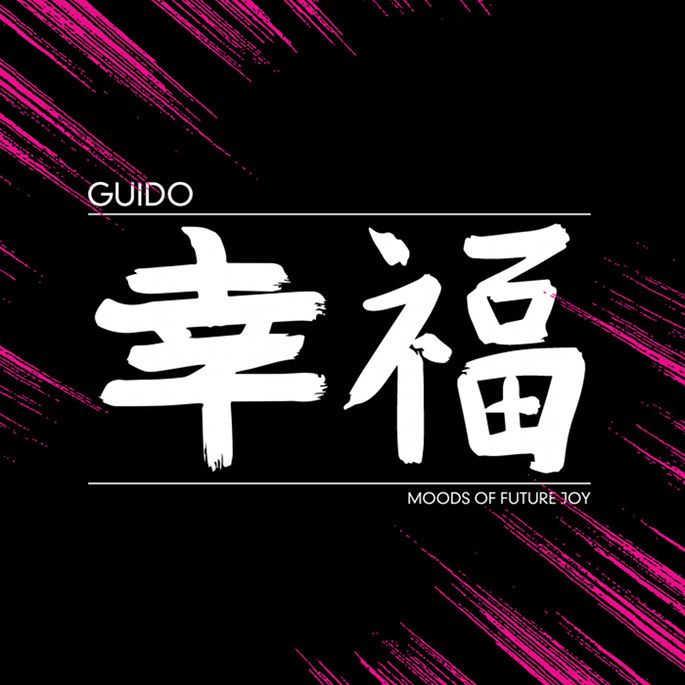
Review: Guido - Moods Of Future Joy


Guido's 'Anidea' was, and remains as, one of the most accomplished long players to come out of the UK - nevermind just the dubstep scene - in recent times. It stretched the melodic possibilities of the 140 template and achieved that rare thing of providing an engaging home listen as well as, with tracks like 'Mad Sax' and 'Beautiful Complication', a strong dancefloor edge. Such then, after a three year interlude of sorts, is the pressure to deliver on what has become a long-awaited follow-up effort.

Keeping it Bristol, with a shift from Peverelist's Punch Drunk to Pinch's Tectonic imprint, 'Moods of Future Joy' is unmistakably a second album: keen to retain the popular traits of an impressive debut ('Midnight Savannah' even contains a thinly-veiled nod to the 'Mad Sax' hook, trailed out on piano) yet aware of the need to press on and progress; "if it ain't broke, then make something just as good to compare it to", if you will. The keys work, a continuously fascinating fusion of classical and jazz training, is all present and correct and will be welcomed by fans of Swindle, and the synth arrangements are as varied and delightful as ever; however where Guido continues to succeed where Swindle is not always as strong is in the aforementioned straddling of living room and dancefloor: 'NRG', in the context of the album, is a natural peak rising between 'Jupiter' and 'Afrika Pt. 2', and yet works just as well rolled out at 1am on a full Funktion-One.

As such, the highlights here are those which exemplify an already-proven talent: 'Same Road', 'Letting Go', 'NRG' and 'Jupiter' are enough to remind you why you pre-ordered the album in the first place, whilst the likes of 'Squeaky Jungle' hint at possible new directions and the nosing in of previously uninvestigated influences. Though very good - and a must for anyone interested in any way in the melodic potential of electronic music, emphasis on music - this isn't an album as accomplished as 'Anidea'; but then a second album rarely is: we can't wait to hear the third.

Guido - Moods Of Future Joy will be released on Monday the 4th of November 2013, and is available to pre-order now. The album is also available to stream in full over at FACT.

W.

Monday, 2 September 2013

Featuring: Coleco


With releases on labels ranging from Hospital's Med School sister label to the sadly recently-deceased Soul Motive - whose back catalogue you would be a fool not to dip your whole leg (and wallet) into - Coleco has a habit of popping up where you might not have expected, and then promptly reminding you why you know his name already. He's one of those rare, under-appreciated producers who makes being ahead of the curve look easy. Think back to Ramadanman getting shout-outs on Youngsta's show back in 2004. Fact Mag recently ran a piece on the recent resurgence of drum & bass and the ways in which the outside influences of dubstep, footwork and hip-hop have driven this, and it would be fair to include Coleco within this resurgence - except, of course, that to confine him with the label of 'drum & bass' would be to do him a huge disservice. From drum & bass, to dubstep (and introducing Thelem to the sound), to footwork, to trap (more on that below), to whatever's going to be interesting next; rest assured that Coleco will have been there before you...

Hedmuk: To introduce yourself, what's your name, where do you hail from, and how would you describe your sound?

Coleco: My name is Alex, and I'm originally from the dormant, soulless commuter town of Farnborough, Hampshire. Now living in Bristol.

It's hard to categorise my sound, but I suppose you could say it's currently focused on up-tempo rhythms influenced by dubstep, footwork, 'trap', and D&B, with melodies/sounds influenced by anything.

H: Something that's always stood out about your tunes is the intricacy in the drums: is this where you start when you set down to write, or do you tend to build the drums in around an initial riff?

C: Yup, drums usually start first. I've tried it the other way around - the odd time has been successful, but it mostly ends up sounding like a pile of crap.


H: In terms of instrumentation too, you're willing to adopt sounds from all over the world. Where do you see this approach as stemming from? What sort of music would you say you draw most influence from, particularly in terms of sound, arrangement and style?

C: I'm not gonna sit here and say 'Yeah, I'm mostly influenced by 50's progressive jazz, Hungarian folk music and 60's dub reggae' in order to sound really rootsy and cool. Let's face it, most of the time we just draw ideas from our favourite producers, a lot of the time from within the same genre, and whack some of those other sounds we like over the top or modify it a bit into something new. A rare breed of people sit in their little hermetic bubble, making avant-garde-experimental-weirdstep - and props to them, but mostly we are just reluctant to admit we copy each other.

I do however sometimes think 'that sound is fucking cool and hardly anyone is using it'; [and that can often be the case with] a lot of instruments from around the world. I was exposed to a good bit of ''world" music as a kid and that's probably why I'm more inclined to put some of it in there. I could also say that Chicago footwork, and 'trap' tunes are influencing my drum rhythms at the moment, alongside older-style dubstep, and certain styles of drum & bass.

H: As someone who caught onto the dubstep sound pretty early, do you think you'd ever have predicted how quickly it might grow? How do you view it now? Is it something that, for you, has been and gone and left you to focus on new things, or do you see it as retaining a healthy influence and potential for musical originality?

C: No, I didn't predict it to grow into the monster it became. Originally I wasn't really in the mindset of thinking about where it would go, I don't know if I ever really thought about it. Some people used to say it would stay well underground and liked to imagine an eternity of pitch black rooms with huge subs, local producer heads lurking about, and lots of slow, meditative "skanking". I was never good enough at it to get big or very well known. When the whole "brostep" thing kicked off, loads of scene heads were up in arms, ranting about how their precious child had been bastardised and the Americans are to blame for everything. I kept quiet, because I knew eventually it'd all come around and a section of the mainstream would break off and discover the underground. This is why a lot of talented producers that hung onto dubstep now have the pleasure of touring the US in hyped venues. Will most of them get a gig in Bristol at the moment? Will they play the city which was once dubbed "The Second Home of Dubstep"? Probably not. Nearly everyone here is dancing to the house music revival now, there are almost no active dubstep promoters.

Dubstep will always be close to my heart because I made what I thought could be called dubstep for years: it's just a tempo and a leaning toward a particular rhythm structure at the end of the day. I know there are a lot people out there that are still pushing the sound forward, and that's great. I don't really conceptualise "moving on" myself; I've made a lot of stuff at 140, I just wanna make and play some faster stuff at the moment, call it what you like.


H: More recently you've been pushing the tempo up towards the 160 bracket. What was your thinking behind this? You seem to be able to take the sounds and styles that you'd always previously worked with, but twist them into a new form here.

C: Well, I first picked up on the fact that Planet Mu were releasing proper Chicago footwork beats, and some other tunes from producers that were hybridising the sound with other stuff. That led me on to dig a bit deeper. To be honest, like a lot of people, at the time I thought so much of the proper footwork tunes I found were interesting, but a bit abrasive. I'd not heard it on a system yet, and it wasn't in my culture. Then there were others tracks that really caught my ear. The overriding realisation was that you could do so much with this. It kicked me out of the habit of just going back to the same dubstep rhythms, and I enjoyed the energy of the faster tempo as I first got into electronic music through drum & bass. It made me start to think about rhythm in a new way again. I'm very grateful to the Chicago footwork producers for that, and the people that brought it over to the UK.

Same thing with the "trap" stuff. Yup... I just used the dirty word that causes so many to curl up inside. I put it in inverted commas because of course I'm referring more to 'electronic music influenced by southern hip hop' rather than the original trap genre. And the same thing again, a lot of it I don't like. A lot of it, personally, I find a bit over the top and abrasive. But more increasingly there's more producers influenced by the movement that are doing stuff I do like. I'm even thankful to the ones I don't, because they were part of what gave me new ideas. Whilst a lot of other people were moaning about it, so horrified by its development, saying 'what the hell is all this crappy trap stuff? It's horrible!', some other producers in the scene were quietly sitting there thinking something like: 'Well yeah, it's not all 100% up my street either, but it sure has given me some new ideas about drum patterns and tune structure.' They just mostly never said it, probably because they were scared about being chucked on the trash heap by the same purists that had done the same with anything else they thought was "trap shit".

H: With more people looking to experiment within that higher tempo range now, who are you tipping - besides yourself, of course - for fans to keep an eye on?

C: Oh god, I wouldn't have the time to think of all of them, and I don't want to separate artists into "known artists" and "up-and-coming artists", so I'll just give a few I'm loving at the moment: The Host, Adam Elemental, EPROM, Deft, Om Unit, Fracture, Sam Binga, Addison Groove, Machinedrum, Danny Scrilla, Ital Tek, EAN, Moresounds, Krampfhaft, and probably a load more that I'll kick myself for not remembering to list. There's lots out there.

H: You're also involved with running Inflect in Bristol. Tell us a bit about the night, and what got you into promoting nights; how do you view the lie of the musical land in Bristol currently, and where does Inflect fit in?

C: My girlfriend, Lorna, and I run Inflect; she is responsible for a lot of it. It's a small, humble operation really. We started it so we could hear some of this higher tempo music with new influences in Bristol clubs. Amongst the fact we still love dubstep and drum & bass, so some of that sometimes lands up in the melting pot too. We do exactly what we want, at the end of the day: we're flexible.

The Bristol club scene has changed so much. It's absolutely full to the roof with house and techno now. It's at saturation point. Actually, no... it's at the point of insanity. Just several weeks ago I wanted to go out and not listen to 4x4 beats. Looked online, there were seven house/techno nights, and one hardstyle night. There is rarely a dubstep event on here, and even drum & bass nights are few and far between. Don't get me wrong, I love a lot of house and techno, most of modern electronic music basically came from house music anyway, but when the variety on offer is so restricted it does start to get a bit frustrating. There just isn't a clubbing fanbase here anymore to keep, for example, a regular dubstep night going - might as well move to the US now if you want that! Things are changing though and, fingers crossed, they will continue to change.

H: How did you go about putting together the mix you've done for us?

C: It's just a mix of some 160-170 stuff I like. I've tried to organise the tunes in a way that they blend fairly well melodically, and take you on a journey through a few different styles. To play some tunes that people already know, and perhaps some stuff people don't. Hopefully it's enjoyable for most people.


H: Finally, are there are any forthcoming releases or anything else in the pipeline for people to look out for?

C: Y'know the classic thing: I don't wanna say anything specific because then it won't happen and I'll look like a tit. All I can say is expect the possibility of a release on a good label that is known for pushing footwork-related stuff, a remix from a well known artist who I very much respect, and collaborations with some very talented producers. There will be more releases from me soon, perhaps even some vinyl. Sorry to not be more specific! And lastly, thanks to Hedmuk for putting this out there.


Download: Coleco - Hedmuk Exclusive Mix


Tracklist:

DjRum - Thank You [2nd Drop]
XLII - No Cure (EAN Remix) [Neon High]
The Host - Neonia [Dub]
Sepalcure - Eternally Yrs [Hotflush]
Adam Elemental - Shadow Self [Dub]
Coleco - Focus 10 [Runtime]
Muaramasa - Midas Touch [TrapDoor]
EPROM - Regis Chillbin (Machinedrum Remix) [Rwina]
Deft - The Count (Bounce) [Rwina]
Coleco - Ghost Rhythm [Loose Squares]
DJ Pillsbury - Everybody Get Down [Juke Trax]
EAN - Burnt [Cosmic Bridge]
Muramasa - Cruel [Trapdoor]
Deft - Masqurade [Rwina]
Om Unit & Sam Binga - Gamma [Exit Records]
Adam Elemental - Zero Point [Dub]
Danny Scrilla - Fallout [Civil Music]
Spirit & Digital - Phantom Force [Fracture Astrophonica Edit]
Alix Perez - Villians 1 Heros 0 (feat. They Call Me Raptor) [Shogun Audio]
Coleco - Nostalgic Future [TrapDoor]
Alix Perez - Warlord (feat. Riko Dan) [Shogun Audio]
Coleco - Micro [Dub]
Flosstradamus - Rollup (Baauer Remix) [Fools Gold]
Fracture - Clissold (Machinedrum VIP) [Astrophonica]
Coleco - Micro (EAN Remix) [Dub]
Paradox - Aphorismic [Paradox Music]
Fracture - Better Than Tomorrow [Metalheadz]
Paradox - Crate Logic [Samurai Red Seal]
Fanu - Leave The Natural World Behind [13 Music]


W.

Sunday, 18 August 2013

Free Download: Lamont - Awake


It's not dubstep, but it's got everything that made dubstep's earliest movements so exciting. And by everything, of course, we mean 'anything': the drums draw rhythms from everything from UK funky to halfstep to techno to halftime kuduro, while the groove and atmosphere stems from a handful of disparate sound snippets - not afraid of keeping it minimal. In fact if there's one thing that could be stretched out as a definition across all of Lamont's output, it's that he's never trying to make just one thing and that, in fact, he wants to get as much of his musical pedigree as possible into every track. Go and listen to his 'Bangclap' remix if you feel like you might still need a further convincer.

There's a vocal snippet run throughout here suggesting that 'the people of this country need to be awakened', and it's a statement that Lamont seems more than willing to challenge.


Download: Lamont - Awake


W.

Friday, 16 August 2013

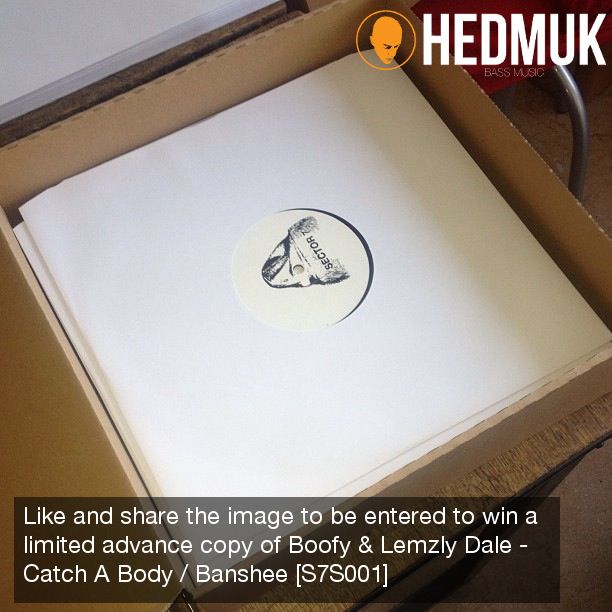
Competition: Win an advance copy of Boofy & Lemzly Dale - Catch A Body / Banshee [S7S001]


Icy synths, coarse strings and clapped snares - lots of clapped snares - are what make up Sector 7 Sounds' first release. 'Catch A Body' broods, with Boofy's trademark skittering hats skipping over kicks set deep beneath a taut, Lemzly Dale string arrangement. Lil Nasty, Dot Rotten and Big H are on hand with adlibs and the result, all stop-start rhythms and spluttered bassline, is greaze. The flip, more a AA than a B-side, takes the stop-start and gives it more strut with a swinging kick/clap combination and cascading hats. Both are heavy cuts and, hardly surprisingly, have peppered the sets of Bristol's most recent grime upstarts, including Kahn, Neek, Asa and Hi5Ghost. This is classic era grime resurrected, and what format could be more fitting than a limited press white label?

In the spirit of all things up-front and exclusive, we've got an advance copy of the record to give away for free - simply head over to the Hedmuk Facebook Page and give the competition image the usual 'like and share' treatment. The competition will close on Sunday the 25th of August; the winner will be chosen at random by an independent third party, and announced via Facebook and Twitter on that date.


W.

Saturday, 25 May 2013

Featuring: Facta

Photo by ShotAway.com

A young producer who's been fairly firmly on the Hedmuk radar since first hitting us up with a pack of beats a few years back, Facta has, since then, been steadily carving his own niche into the UK underground's ever-shifting sound map. With one foot held steady in his '06-dubstep roots, the other treads through garage, grime, UK funky, hip-hop and the trippier side of experimental electronic and what results is sturdy, rough-edged and system ready. This broad approach is what makes the East Londoner's beats so captivating: whilst one might be swinging out off tough kicks and snappy snares, the next will be all tucked grooves and slinky hi-hats, and the next still will just have you sat bewildered at how he's managed to fit every bit of it together to make something that moves so slickly. It's not worth simply saying he's one to keep an eye on; it would be more accurate to just wish anyone luck in predicting which direction he might lead that eye in next...

Hedmuk: By way of introduction, what's your name, where do you hail from and how would you describe your sound?

Facta: My name’s Oscar; I grew up in Hackney, East London, and currently live between there and Bristol, where I’m living and studying most of the year. In terms of my sound, I tend to see everything I make in terms of dubstep as that’s where I initially found my roots – realistically, though, I produce a variety of styles that draw from garage, grime, dubstep, techno, hip-hop and breaks to varying degrees.

H: Would you consider yourself as being from a musical background, or is it an interest that you've developed yourself?

F: Well it wasn’t as if my parents were playing in bands or singing in choirs or anything, but like most families there was always music about in the house and from a young age I was slightly obsessive about finding my own path within music, which was something that my family always encouraged. When I was 9 I was convinced that I’d be in a world famous punk rock band touring the world by the time I was 16 – I’m ashamed to say that I’ve let my kid-self down in that respect, but I guess I’m still driven by the same ambition to create stuff now as I was then.


H: In terms of your actual production, you seem to take a mostly sample-based approach; do you feel like having a wide sphere of influence helps with this? Where, or from whom, would you say you take most influence from?

F: Yeah, well that’s definitely the key characteristic of my sound – I work almost entirely from samples; it’s partly due to an inability to programme synths very well and partly down to a deep respect of the whole culture and procedure around sampling. I listen to a lot of hip-hop and experimental electronic music, from which I have developed a love of rough, fast sample work. I’m also heavily influenced by non-electronic music – most recently jazz in particular. For this reason I’m always hesitant to make music that sounds overly polished or fine tuned; when I produce a track I like to cut up the samples right on the grid, trying not to quantize things too heavily or cut the clips too precisely: I tend to leave in trails and imperfections so as to maintain as many of the nuances of the original source material as possible.

H: A lot of people from the city talk about Bristol as being a great creative environment to live and work in: is this something you would agree with? How important is the sense of existing within a creative community to you?

F: Bristol is definitely a special place. I could talk on for hours about it, but anyone who has spent any length of time here will agree that there is something about the city and the scene here that just feels distinct from the rest of the UK. It’s always had its own path and it continues to develop on its own trajectory: Bristol Dub and Reggae, Bristol Jungle, Bristol Trip-Hop, Bristol Dubstep and Grime, Bristol Techno – these have always been special, unique pockets within their relevant scenes and all have a unifying trace running through them. It’s a constant source of inspiration and motivation to work and play out here, not only is there a huge audience for forward-thinking, experimental music but everybody is willing to help one another out and collaborate in a way that I never see happen in places like London.

H: Your tracks have featured heavily on Dusk & Blackdown's Rinse show in recent months, how does it feel to have that kind of backing? How far would you consider this idea of a musical community to extend to the tight group of artists being represented on the show?

F: It’s been a massive honour to receive recognition from figures that I have looked to and respected for years and years, and it’s been particularly great to be involved with the pocket of artists working within the Keysound sphere over the last half a year or so: it has the perfect combination of feeling like a tight, cohesive movement whilst still remaining totally undefined and uncontained. There’s a massive variety in sound from producer to producer: nobody feels like they’re stepping on each other’s toes. We’ve all got our own room to breathe within a collectively-occupied space and that’s a very inspiring thing to be a part of.


H: You've also recently started a night in Bristol: can tell us a bit about your reasoning behind it, and what sort of ethos you're aiming for?

F: The night in Bristol developed as a result of me and two friends deciding we wanted to throw no-nonsense parties at some of the cooler, smaller venues across Bristol: you can’t move for great, cutting-edge line ups at big clubs in Bristol, but we did feel that there was room for a party where the emphasis was taken off new music and reinvested in location and atmosphere. So we hatched the idea of throwing house party-esque events at cool locations where we’d just ask friends and DJs to come down and play sets that they wouldn’t be expected to play, giving them the chance to draw strictly for their favourite party jams. We called it Elephant 'cause that’s a dumb name for a dumb club night. It’s going to be sweet.

H: Take us through how you approached the mix you've put together for us.

F: Well I’ve recently been lucky enough to get to know a bunch of stupidly talented producers – both in person and through exchanging tunes online – and so I wanted to throw as many of them in as possible, plus include a few of my own. The mix sits somewhere between what I’d consider to be home listening and the sort of thing I’d play in a club. Normally when playing out I tend to get carried away dropping fruity old garage tracks and golden era dubstep and grime; I’ve reigned that in a bit for this mix, although couldn’t help but slip a few percies in.

H: Finally, are there any forthcomings lined up or anything else in the pipeline that you'd like to put the word out on?

F: I have a vinyl-only 12” EP coming out this summer which will feature 'Montpelier', 'Kobra' and 'Upsetter'; I have a track with K-Lone that's just come out on the unbelievably-good debut 'Chord Marauders' compilation [now available exclusively from the Chord Marauders website]; I’m in talks about a few other 12”s, although nothing is set in stone; I’m working on collaborations with a bunch of producers including Gantz, Wen, Rabit and B9. I’m going to be playing at Summer Saturnalia festival in July alongside Pinch, Elijah + Skilliam, ∆kkord and Gantz, and that’s about it on news. Thanks a lot for having me on – been a pleasure to get involved.


Download: Facta - Hedmuk Exclusive Mix


Tracklist:


$tush - Dollar Sign [Social Circles]
E.M.M.A - Cherry Favour [Dub]
Facta - Montpelier [Forthcoming]
Beneath - You & Me Remix [Forthcoming]
Dizzee Rascal - Strings Hoe (Wen Remix) [Dub]
Facta - Kobra [Forthcoming]
Brunks - Steppin' [Dub]
E.M.M.A - Untitled [Dub]
Facta - Hieroglyph [Dub]
Epoch - Gun Talk - [Egyptian Avenue]
Gantz - Free Focus [Forthcoming]
Sepia - Outbreak [forthcoming Redshift One]
James Fox - Put It Back (Ramadanman Remix) [TAKE Records]
Etch - Lost Methods [Dub]
Karma - Armshouse Dub [Dub]
Wen - Galactic [Dub]
Bloom - Quartz [Gobstopper Records]
Facta - FWD [Dub]
Amoss - Tangent (Geode Remix) [forthcoming Horizons X]
Facta & K-Lone - Voodoo [Chord Marauders]
Solwork - L Town [Dub]
Geode, B9 & Congi - Scrumpy [Chord Marauders]
Facta - 36th Chamber [Dub]
Kode9 - Addiction - [Hyperdub]
Rabit - Wolf Spider [forthcoming Glacial Sound]
K-Lone - Melt [Dub]
Mark Pritchard - Heavy As Stone [Deep Medi]


W.

Wednesday, 15 May 2013

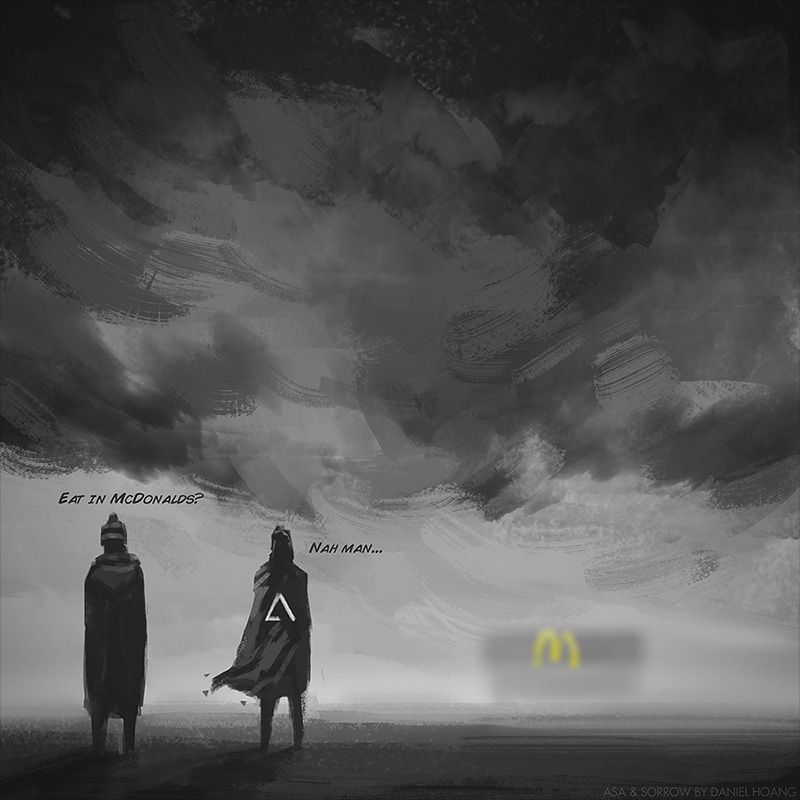
Asa & Sorrow - Grime Mix (Hosted by M.I.K)


Bristolian's Asa & Sorrow - perhaps best known for the sort of emotive, garage-flecked numbers that have made up recent releases such as Asa's stunning 'Arcane EP' or Sorrow's masterful debut album, 'Dreamstone' - have been redirecting grime's attentions towards the South-West with a series of short clips being uploaded to Soundcloud. Combining a noted homage to some of the genre's classic sounds (be it Eski, string-driven, or just plain moody) with the advanced production and acute attention to detail so emblematic of their individual genre-leaping endeavours, the results are intensely controlled exercises in shifting a rave.

Regular visitors to Hedmuk will be readily familiar with the MC gracing this production showcase, but what sets M.I.K apart for us is not necessarily just his diverse flows or witty one-liners but his ear for a beat: his versatility as well as his willingness to vocal a huge variety of different styles is the sort of refreshing approach to making music that has been catching the attention of new listeners daily. As something of a sequel, then, to his recent hosting a mix from another Bristol resident, Kahn (who has himself done remixes for the young MC in the past), M.I. has linked up with Asa & Sorrow to reset the levels and raise every bar in reach...


If you want to see Asa & Sorrow doing this live in your locality then asaofficialwhat@gmail.com is the place to begin the booking process. And if you want MIK down too, then bookmik@live.co.uk is the address.

W.

Friday, 15 February 2013

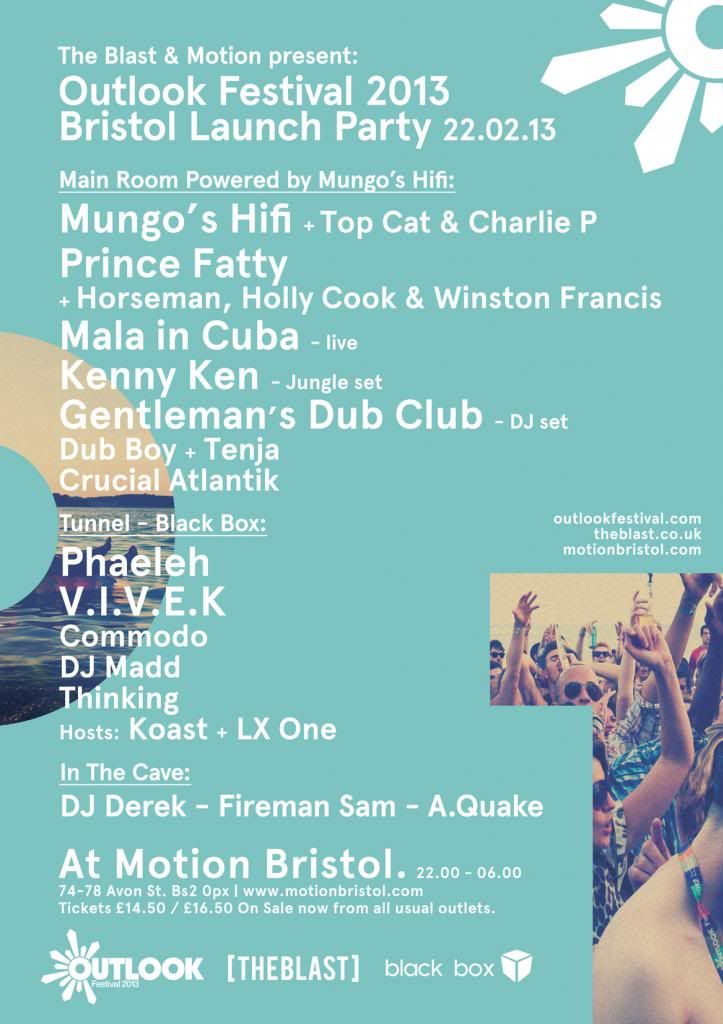
Competition: Win tickets to Outlook Festival's Bristol Launch Party @ Motion, Bristol - 22/02/13


Outlook Festival is set to be one of the summer's hottest tickets again this year, and as the lineup and stage-host announcements trickle out so too do the infamous launch parties get underway. And where better a place to start than in one of dubstep's spiritual homes: Bristol.

With the full Mungo's Hi-Fi Soundsystem getting a workout in Room 1 from a line-up of legends including Prince Fatty, Mala, Kenny Ken (and, of course, the Mungo's boys themselves), and Room 2 being left in the more-than-capable hands of our friends over at Black Box - with Phaeleh, V.I.V.E.K, Commodo, DJ Madd and Thinking taking care of proceedings.

To support the event, we've linked up with Motion to offer the chance to win a pair of free tickets to the event; and all you have to do to be in with a chance is send your answer to the following simple question to hedmuk@gmail.com, with 'Outlook Motion Competition' as the subject:


From which UK city do Mungo's Hi-Fi originate?


The competition will end at midnight on Thursday 21st of February, at which point a winner will be chosen at random by an independent third party and notified by email, as well as being announced via the Hedmuk Facebook and Twitter pages.

W.

Friday, 28 December 2012

Free Download: Coleco - Hedmuk EP


Criminally underrated, Bristol's Coleco (follow him on Facebook here) is one of the most consistently exciting producers working in the UK right now: able to pull an immense amount of space from pretty much any tempo, his recent output has stretched all the way up to the too-often-static 160bpm range, and with impressive results. When Skream made a return to Rinse FM last month - alongside Loefah and Route 94 for an extended one-off show - he played 'Hypnagogia' from Coleco's last Soul Motive release and with it caught the attentions of a previously-dormant audience.

And it's to this audience that this free EP: a collection of tunes ranging from tight-stepping garage on 'Lovin Me' to a stretching cross of jungle, juke and breakbeat on 'Prime', and from the indefinable 'Coleco sound' of 'Automatic' - which manages to introduce more ideas over the course of one track than some producers could handle in an album's worth of material - to the pure bliss 'Smokey', with Victoria Klewin's vocals contributing a generous helping of soul. Enjoi:


Download: Coleco - Hedmuk EP [.zip]


Download: Coleco - Lovin' Me [320kbps mp3]
Download: Coleco - Lovin' Me [WAV]


Download: Coleco - Prime [320kbps mp3]
Download: Coleco - Prime [WAV]


Download: Coleco - Automatic [320kbps mp3]
Download: Coleco - Automatic [WAV]


Download: Coleco - Smokey (feat. Victoria Klewin) [320kbps mp3]
Download: Coleco - Smokey (feat. Victoria Klewin) [WAV]


Preacha.

Tuesday, 4 December 2012

Featuring: Black Box / Box Clever


Two of the most consistent labels around, Black Box and Box Clever have both shot to bag-on-sight status over the last few years. With a wide-ranging and dedicated fanbase, both Black Box and its junior label (although now it's perhaps more accurate to think of it as a twin), Box Clever, are imbued with that hard-to-pin-down sense of openness and creativity that made dubstep so exciting at its inception. We had label head, and all-round top bloke DJ Thinking on the phone for one of our longest, and best, interviews to date; and new signee Gantz has contributed a guest mix to match - incidentally making him the first artist to lay down a second mix for our exclusive series.

Hedmuk: To introduce yourself to anyone who doesn’t know yet, what’s your name, where do you hail from and where are you currently based?

Thinking: Yeah, I can give you a little background if you want? My name’s Diccon, I grew up in Dorset but have lived in Bristol for about fourteen years now. I DJ under the name Thinking and I also work at Chemical Records, where I’m the head of music retail. I also run a label called Black Box, and its junior label too, which is called Box Clever. And that’s pretty much what I do with my days now, yeah, I sell vinyl and I also release it on my label.

H: So, selling vinyl essentially (laughs).

T: (Laughs) Yeah, I’d say we’re luckier than most at Chemical because we’re quite big and quite well-insulated so we’re still selling vinyl at the moment; but give it a few more years and I’m sure that will change, unfortunately. But yeah, at the moment I spend my days knee-deep in vinyl, basically.

H: ‘The Life’.

T: (Laughs) Yeah.


H: You say that you've lived in Bristol for the last fourteen years; you can’t talk about dubstep without mentioning Croydon, and then almost immediately afterwards it’s Bristol. And even wider than that, there’s a lot of people from Bristol who say that the city itself has had quite a major influence on their taste in music, or their musical development: is that something you’d go along with?

T: Yeah, well, to be honest with you when I was a kid growing up in Dorset I was a straight drum & bass head in terms of what I used to DJ and stuff, and I was a huge fan of Full Cycle and the ‘Bristol sound’; and when I was at school we used to just about pick up the Full Cycle show on Galaxy on the radio, so I used to tape that in the ‘90s. So yeah, I love Bristol but I kind of moved here by default really: I used to play in a band and the guys that I was in a band with were moving up to Bristol so I moved up with them when I was 18 as I was looking to move out from home, basically.

So I kind of wound up here just, not really by accident, but by default because there was nowhere else I was really going to go at the time. But since then I’ve really put down roots here, it’s a wicked city. It’s a good size, not too big not too small; culturally it’s really interesting, as there’s a massive population of students here so lots of young creative people around. I mean, at the height of University time, students make up nearly 10% of the population; so there’s lots of students around and a lot of people who graduate from here decide to stay on here as well, meaning there’s a big young population here. So things like dance music, underground music and the creative arts are really well represented here.

H: So I imagine you’ve seen, particularly in terms of electronic music, quite major developments through Bristol; would that be something you’d say has influenced you, like you’ve kind of grown with the city as its taken on new strands and made them its own?

T: Yeah possibly, there’s sort of a symbiotic thing in a way; I mean, when I was around 18/19 I was into a lot of music but when it came to DJing my record collection was predominantly D&B and jungle and I’d been buying records like that for maybe 5 or 6 six years before I came up here. Then for a while up here I was still straight drum & bass as well, and then actually I think it was a record shop I started going to - which was a cool little shop in the centre of town which doesn’t exist anymore – where I was buying lots and lots of different kinds of music. I was still making music in a band too, that was more sort of like instrumental jazz-funk stuff and we also started making hip-hop – using the studio equipment to introduce, like, different sounds and stuff. I was into hip-hop a lot about ten years ago, and making hip-hop and playing gigs; and, I don’t know, like I say, my musical taste developed: I was, perhaps along with a couple of other people, the first to latch onto the darker garage and dubstep records that started coming out around ten years ago, and then was one of the first people playing it too. So it was almost like we were pushing it in Bristol rather than, you know, it cropping up in Bristol and us getting into it, if that makes sense?


H: Yeah, that makes sense.

T: But then, the thing is in Bristol it’s such a broad-minded city and people aren’t too narrow-minded or blinkered in terms of what they listen to or what they’re happy to go out and rave to or whatever, so it [dark garage/dubstep] was very quickly accepted in Bristol and you had a lot of people writing music who jumped on it very quickly, and that’s why it kind of grew so big so quickly and why Bristol became so recognised as being an epicentre of dubstep after Croydon and London.


H: Yeah. So, moving more specifically to talking about the labels, what was it that made you want to start a label? Obviously you were very deeply immersed in music as a fan, as well as as a musician and DJ, so was it a case of wanting to start a label and then having to look for artists or the other way round: having these tunes, seeing these tunes there and thinking ‘I want to release them’? 

T: Well, where I am now it’s taken quite a long time to get here. I kicked off a label years ago called Reduction which had a handful of releases on it, and that was like a Wedge and Gatekeeper thing, people like that, and we did an early Hyetal record too.


H: Yeah, I remember the 'Pixel Rainbow Sequence' release.

T: That was kind of self-funded, and anyone will tell you that something that starts out like that, with no real plan, is really difficult to keep momentum with as you’re constantly trying to feed the 'money machine'. It’s a very difficult thing to do without getting some sort of funding and having a very clear plan, clear release schedule and a clear vision – which I didn’t really have at the time; and I learnt lessons, I learnt a lot of lessons from it as to how not to do things (laughs). But then I started work about four and half years ago at Chemical, just as the dubstep buyer basically, and about a year and half into that the top guys at Chemical - the directors who used to run a drum & bass label back in the day and, back when trance was really big, they had a guy there who used to run a trance label out of Chemical as well - they said 'look, you know, we’ve done it before so why doesn’t one of you run a dubstep label: why don’t we start one up?' So yeah, I thought 'look, I’ve got the funding here and I’ve also got a very good understanding of how to sell records' - you know, what does well and what doesn't - so I was in a great position to be able push a label as Chemical is probably still one of the biggest outlets for dubstep vinyl.


H: Yeah, it’s pretty much Chemical, Red Eye and Juno at the moment, in terms of big online retailers.

T: Yeah exactly, there’s only a handful of big shops and we are, you know, one of the biggest. So yeah, it seemed like a very natural thing to do, especially when you’ve got the financial backing and I had a designer that I could work with just to work on logos and stuff. All the things I do, it’s very easy to plug that into the bigger machine, which is Chemical. But it’s still very much my work, it’s not like there’s loads of other people doing it. Around about that time we were starting it we also had the guy who was the head of the drum & bass buying who started a drum & bass label and then a friend of mine came back to work at Chemical as our label manager, and he was literally in charge of sorting the manufacturing, you know, and taking care of the digital side of things and the contracts and the financial stuff; so we started to have a little empire, if you like, of labels. So yeah, we had like a handful of labels and Black Box just became even bigger and became really successful, so we dropped some of the other labels and just concentrated on that and Black Acre.


H: So do you think that this sort of security as it were, in particular the financial backing, has allowed you to bring in a lot of brand new artists, and particularly producers from overseas as well? You’ve sort of plucked DJ Madd and the likes of TMSV and more recently Gantz from smaller, localised scenes. Would you say that this security has played quite a major role in allowing you, not necessarily causing you, in allowing you to do that?

T: It’s about taking some chances: on the new artists where I had sort of a gut instinct and I couldn’t be sure whether we were going to create a big profit on the record or not, you know. But if I can at least break even then we’re doing OK; with that stuff that’s what you’ve got to be able to do. But what it did in the first place, it meant we could get a good [first] two releases out in relatively quick succession, which is really important if you’re going to start a new label; particularly over the last three years with such a difficult environment to run a record label in. There's so few sales that you need to be able to set out your stall and say ‘this is what I’m doing’ and, you know, you’re defined by pretty much just the releases you put out. At the end of the day a release is only two tunes so you’ve got to get a bunch of releases under your belt pretty quick to say ‘this is what we do, this is what we sound like’ and give people an impression of you in order to make an impression, to stick in people’s minds. Otherwise it’s very easy to get forgotten about.
So that was what having the financial backing and having a label manager working with me and doing, you know, a lot of the boring legwork for me, enabled us to do in the first place. But then as we go on it has, having that label manager and a bit of financial security, meant we can start looking to do bigger things or, like I say, take chances on people and stuff like that.

In terms of the international roster, it’s completely arbitrary really. The internet has opened up the world through communications. I would have been down my local club chatting to people down there, chatting to local DJs and what new tunes they have on dubplate that they’ve been down to London to have cut or whatever; and that would be the much more sort of local-centric scene, but nowadays there are no barriers: all of my label work with those guys is mostly via email, and sometimes via AIM. It’s just as easy as if someone’s in the next town, or whatever.


H: Yeah, I was going to ask about that; because there is quite a significant proportion of your roster which is overseas producers, and it’s something which, I suppose you’re right in saying, is quite arbitrary because people don't necessarily think of Black Box as a label especially aimed at providing bigger opportunities for overseas producers because actually labels, would you agree, sort of have to be open to it: you don’t tend to get very 'local' labels anymore.

T: No, I don’t think so, no; I mean, not unless you specifically set up to do something like that.  think Deep Medi perhaps in the beginning was, with Goth Trad excepted, a lot of London people, and obviously Pev[erelist] with Punch Drunk set out with a specific idea that he was only going to release people from Bristol or people that were based in Bristol or, you know, have some sort of connection. So, like I say, nowadays you can’t really afford to do such things because there’s so much good music out there that there’s just no reason to. I mean, some people I haven’t but I’ve met most of the artists on the label now, pretty much all of them –  but say Gantz, obviously he’s a new guy on the label, and I’ve never been to Istanbul: I’ve never met the guy but I sort of became aware of his music and I hit him up for some tunes, he sent me something good and then we released it. It’s as simple as that, you know, because we’ve got the good 'machinery' nowadays, or the sort of processes that we can do certain things better now and more easily; it doesn’t matter that I haven’t met them [the producers] yet, I’m sure they’ll treat me to it soon enough (laughs).


And I also think it’s nice, you know, people can have a new angle on music; and while I’m very proud of the UK as a sort of hotbed of music and stuff, it can be a bit trend-driven sometimes and I think it can take someone with a slightly different slant on things to connect you with new ideas and, well, to surprise you.


H: I think that’s particularly important for a lot of the overseas artists because, especially with something like dubstep, so much can be attributed to how you experience it in a live setting and that’s something that, for the likes of like Gantz in Istanbul, he won’t have a rave that he can go to every weekend and hear which tunes are going off. So it’s more organic almost.

T: Yeah, it’s just an interpretation which I really appreciate. I mean, more and more when I was starting the label I was really searching around for tunes to feed the label. Like I say, it’s really important to get things going and really push it out and try and make an impression with your idea, but actually when you’re not a known entity you haven’t got access to just any producer you want, it’s quite difficult to sort of define your sound or your label very easily because you’re really having to sort of, not make do because that sounds like you’re signing artists that you’re not happy with, but just having to do your best with tunes, and then as you get bigger you’ve got access to more people and they come to you with their music and you can start defining yourself more easily. Now I’m much more, you know, releasing exactly the sort of music I want to and I’m able to seek out artists regardless of where they’re from; so like TMSV and Gantz, and LAS from Finland as well: these are all people who really are very much a good representation of the sort of music that I want to be releasing.

H: And the Gantz release is out now, but actually on Box Clever; and it didn’t seem like it was so long after Black Box started that Box Clever also came about…

T: Yeah it was only about sort of 9 or 10 months, I think. Although it was supposed to actually be earlier than that, but we kind of delayed over the summer in the end and started it in like September, two years ago or something like that? We sort of worried when we started Box Clever about whether we were stretching it a bit too far, but luckily I think the whole idea’s fleshed out quite nicely and each label has got its own identity. But I won’t be setting up, like a, White Box or any other sort of Boxes any time soon basically (laughs).

H: (Laughs) Yeah, OK.

T: It didn’t start as an arbitrary thing, but we had these tunes by Synkro that were sort of knocking around, and by TMSV, and I was into these tunes that weren’t quite, at that time, what I considered to be ideal Black Box material - which is often a bit tougher, a bit darker, a bit more techy – and they were a bit more organic, and yeah I just sort of fancied having, well, what it was originally conceived to be, a sort of junior label where we sign the younger artists, give them a release or two to break and then move them up to Black Box. But really it’s become more [than that]: Box Clever’s kind of more of a representation of what I’m really about musically and Black Box is like my effort to run a really great label with music that I love, but is also about being as big as possible and doing, you know, big releases as I want to push the artists and make it more [a label] for the artists themselves, if that makes sense? Like I say, I’m very passionate about everything I sign and I wouldn’t release anything if I didn’t think it was amazing but I'd say that with [Black Box] I just want to push that canon, whereas Box Clever is like my baby: when I DJ out I find myself drawing for the ten inches a lot more, you know, which is sort of interesting.


H: So would you say you have a clear idea in your head of what is suited to each label?

T: There’s a lot of crossover, you know; I’m not going to say 'this can only be on such and such label and that can only be on that'. But sometimes things just work out that way: the TMSV stuff, the collabs that he did with DJ Madd and then with June Miller, we had like three tunes there and a [J:]Kenzo remix and they just had a bit more of a tougher, techy edge to them so, you know, that’s like a Black Box thing, and we have the little XXX imprint which is almost like a way of releasing the stuff which is like cool, DJ tools that can’t quite fit anywhere else. So that was a perfect home for it, but mentally for me it wouldn’t have quite fitted on Box Clever: it was a bit dark and techy and minimal, whereas the Box Clever thing is a bit more of a traditional dubstep sound, a bit more sort of five, six, seven years old; and I'd say that’s my favourite sound in dubstep and that’s kind of what I’m looking to represent with the label in some ways. 

H: Yeah, because it was actually through Box Clever, having picked up the first TMSV release, that we were sort of introduced to Black Box; because I’d heard the ‘Someone’ remix but, I don’t know, it’s strange how for us, and I imagine other people too, Black Box seems to have grown outward from Box Clever almost.

T: Yeah totally, I do think they’re quite distinct entities in a way and certain artists can work on both and that’s cool; but yeah for me, and especially sort of moving forward from the end of this year onwards, they’re definitely different labels with different identities.

H: And the other thing, even between both Black Box and Box Clever, you’ve now got quite an extensive back-catalogue but the roster seems to still be relatively small, would you say?

T: Yeah we’ve got our core team, if you like, of people that we work with; you know, Madd for Black Box is probably the single artist we’ve put the most music out with, and TMSV has had, what, like three Box Clever releases now, and a couple of things on XXX as well? And Lurka has had quite a big impact as well. These are just people that we've built up a relationship with early on, and to me their music works really nicely for me and it suits the label that they’re on so it’s really good. I love to work with artists on a repeat basis because, you know, it looks good for both artist and label: it shows that we’ve got a good relationship going. Like what I was saying about labels only defining ourselves by the music that we release; if you’ve got someone and you really love their music and you love working with them, then you want to do that because you want to continue defining the label in terms of their sound and also the way they develop. I mean, you look at something like where Lurka’s come from in the last year or two, and he’s gone off in an amazing direction and then, his next record's not actually on Black Box but, you know, we’ll do something next year. TMSV as well, his sound has come on leaps and bounds in the last year or two, so it’s really nice that the label gets to grow with them.


H: Yeah. So do you take on, well A&R is maybe too bland a term for it, but a sort of developmental role at all with the artists?

T: Yeah, there’s always a sort of dialogue of like, you know, ‘what do you want to do next?’ Like with Madd: 'we’ve done some 12s we’ve done an EP, we’ve done another EP, so let’s talk about doing an album because, you know, you’ve got the tunes for it, you’ve got the following for it so let’s do it'. Especially with Black Box, as I see it as the label for the artists, the entire label, the framework, everything that we do is based around the artist because, you know, I’m not an artist myself, I didn’t set the label up to release my own records and actually in the last three or four years I’ve DJed much less than I did in the last ten years; so for me it’s not predominantly about building a career out of it, out of the label, this is about something that provides these guys with something, in an ideal world, that they can make a living out of. If I can sell a few of their records, and they can get some DJ bookings and then they can stop doing their job, or after Uni they don’t have to go and find a job and they can start doing music full time, then that’s kind of like the ideal world for me: just giving somebody the opportunity to do what they want for a living.

H: You mentioned albums, and in things I’ve read with other A&Rs or label owners it quite often comes out that an album, from the perspective of a label owner or whatever, is almost quite a daunting process because it’s seems like something that’s much bigger and harder to manage than a just a 12” single or and EP: did it feel like quite a big step?

T: Well, yes and no. It’s not just that a record or an EP is two or three tunes and now its an album of 10 or twelve so you’re just multiplying the work by that much: it’s exponentially more work in terms of, you know, trying to get people to write about it, PR coverage, radio plugging, everything. Every job becomes so much bigger, and especially for a small label it’s very difficult to make a significant impact with your release in terms of PR and media coverage unless you’ve got really genuinely explosive artists. But it’s not something I'm scared of, I mean we’ve done three albums on Black Box now – Kryptic Minds was the first, and then we’ve done Madd and Seven – and I don’t have any more concrete plans for albums in the [near] future, but it’s something I’ll look forward to doing. For me, it’s something where you wait until each artist is ready and then you say, you know, ‘shall we do it?’ And then the writing starts and the work at the label end starts, in terms of preparing PR and photos and all stuff for the press and all the logistics of manufacturing and what have you. And, you know, like I say I’ve also got an amazing label manager, Ian, who’s a real wizard when it comes to nailing the industry stuff and the PR stuff and the plugging and stuff; so it’s a lot less scary for me because I’ve got a great team behind me as well.

H: And with this, you release, as well as digitally, pretty much everything on vinyl and you’re happy to do CDs too. You don’t seem to be too bothered about stretching yourself across all formats.

T: I think at the moment you have to do a CD along with vinyl for an album project; I don’t think, you know, from the artist’s point of view, if you say ‘I’ve done my album, and it’s my first album’ or whatever, ‘and here’s my triple vinyl’ you'd sort of always want the CD: you want the whole package, you know, with all the pieces. The sort of thing you can give to your Mum, you know (laughs). So I think at the moment you still need to have that, because it’s the recognised album format, if you like. I do think there’ll come a time when people maybe don’t do it anymore though.


H: Is it fair to say that you do value vinyl as a format, but not just particularly because of sentiment or that it’s the format that you grew up with but because it’s also now, in this competitive, difficult economic climate, it’s almost symbolic of saying ‘this is quality music because I didn’t mind paying to get it pressed’?

T: Yeah, absolutely: the commitment is absolute, it’ll be a very very sad day when we stop releasing records, and hopefully it’ll be a long time from now. To be honest with you, I’ve been buying records for nearly twenty years and it just would seem weird not to release on a record. I have no sort of snobbery about, you know, vinyl over digital or CDs or whatever; I have no issue with anyone who wants to DJ with whatever format they use, but for me I don’t really get it: I’ve never been a digital DJ, I don’t really enjoy it as much. It’s just a simple fact of releasing a record really, I wouldn’t think of doing it any other way. But you know, with the Biome EP for example we did an extra track on the digital and it seemed like a nice thing to do, it’s a shame you can’t release everything you want on vinyl, but there’s financial limitations. I think it’s nice to do extra stuff here and there, but at the moment the vinyl definitely comes first, and everything else is a consideration afterwards.

H: Would you say that working at Chemical Records has also encouraged you to keep backing vinyl, because obviously you spend pretty much every day, as it were, moving boxes of it around and being reminded perhaps of how important it still is?

T: You know, maybe it’s a bit of a double-edged sword to be honest with you: working in that environment you’re surrounded by vinyl, and obviously I'm handling my own stock and I imagine a lot of people perhaps don’t get to see their 500 or 1000 records turn up - if you’ve got a label that’s working with a distributor, then you’ll get a TP in the post and they’ll send you, like, a box or whatever of thirty copies or so, but you won’t ever see the whole mountain of vinyl when it arrives - and you get a bit ‘oh my God, how am I going to sell all these?’ Sometimes, you know, I just shit myself (laughs) I think, ‘fuck, we’ve just pressed so many records how are we going to sell all these?’ But then you send half of them to your distro and you can calm down a bit. 

But also, yeah, I walk around one of our warehouses at work and its got a hundred and fifty thousand records in it, and to be honest it’s easy to get blasé about it: you order, you know, a few hundred copies of a big album that’s coming in, and there’s hundreds there that’ll go easy. I do perhaps become a little more blasé about vinyl but I’m still here doing it and I still love buying records, and I still love cutting dubplates. Records still give me a lot of joy, so yeah it sort of keeps the passion alive in me in some ways; like, my label manager runs Black Acre and yesterday we got the TPs in for the new record that’s coming out in December, and we were just out in the shop checking them on the monitors out there, nice and loud, and we were just loving it: the tune sounded amazing on vinyl and we were just shouting and screaming and slapping the desk about how good it sounds…

H: And you get to do all this as work as well (laughs).

T: (Laughs) Yeah, we both said ‘we knew this was going to sound amazing on vinyl!’ It sounds like old Wu-Tang beats or something: it’s amazing. So yeah, the passion’s still there: a lot of times you listen to the digital masters when they come back from Masterpiece, and you’ll be like ‘you know what, these tunes are going to sound amazing off wax’ and then two weeks later you get your TPs and put them on loud and you’re like, ‘yeah I was right, it sounds amazing’. So yeah: it’s still number one for me.


H: You’ve also started doing things like the Black Box boat party at Outlook this summer and there’s been Chemical Records stages and things like that before; is this something that you can see yourself getting more and more involved in? Because, as you say, you want your artists to be getting lots of bookings so is doing these label showcases live something you can see yourself doing a lot more of?

T: Yeah I’d love to; I mean last year we got involved with Outlook at a very late juncture, so we did a Black Box boat party and the little Chemical thing too with the Dub Studio guys, like cutting dubplates and stuff; but this year we were on board right from the beginning and we had a massive stage at Outlook and another boat, which was great. I’d love to do more, we’ve done a few label nights, like we did a Stink Like Sock last November which was amazing and we also did the night in Manchester which was cool, and we’ve done sort of one or two other label nights; but yeah, I’d love to do more. It’s something I’d do in Bristol if I had the time and energy for it, you know, and the stack of cash to risk on it, as promoting’s a tricky game. But yeah, I’d actually love to do much more label showcasing because I think it’s kind of cool for the artists to get together and play together and stuff, and it’s always really good energy when everyone’s backstage and that, and having a laugh. But you know what, it’s not actually something that many people have approached me for; there was a couple things that were planned and then fell through but yeah, I’m sort of sat waiting for more people to ring me up and say, you know, ‘can we book X, Y and Z artist’. And we do try and bring something big to it, I mean last year for the Stink Like Box we did we made an exclusive t-shirt and we gave away fifty on the night and stuff like that, and I always bring a box of records to chuck around and stuff like that, and stickers and what have you –

H: (Laughs) Talk about being blasé about vinyl…

T: (Laughs) Yeah! But then that’s the cool thing: because we manufacture everything in-house, the actual [individual] units don’t cost us loads – they’re not six pounds a record to me, they’re a bit cheaper than that – so it’s an acceptable cost if we want to get ten copies of a record and say ‘you know what, we’ll just give these away today’, because it’s cool, and everyone likes to get free stuff: I know I love it! (laughs)

H: And that’s something else actually that’s very much associated with Black Box and Box Clever is the t-shirts and the record label artwork and things like that, it has got a very striking look: and that all seems to add to the feeling of the two being labels that you can trust, because you're given an idea about what each record’s going to sound like and you know it looks good as well. Is the aesthetic something that’s quite important to you as well?

T: Yeah, it really is. Although when it comes to doing a sleeve or something like that I start sweating almost immediately because it’s something I really struggle with: visually I know what I like, and I know what I like when I see it, but if a designer says ‘what do you want it to look like?’ My mind goes completely blank and I’m like, ‘er, try this, try this, try this’ and I let them go away and then come back, and it’s useless and I go ‘a bit more like this or this’. You know, I’ve sent a few designers completely mad just trying to do what I want. But eventually we get there and we produce something wicked. So yeah, I do have clear ideas about how things should look but they sometimes get a bit fraught between me and designers as we try and establish what it is I want things to look like. I was lucky that we used to have an in-house designer at Chemical, called Jamie, who designed the original Black Box logo and a few t-shirts and stuff, and he did a great job. We’ve got a couple of in-house designers at Chemical now who’ve also done more recent work, like the sort of Illuminati hand design was from one of our in-house printers. But yeah, like I say, we don’t always do big sleeves but when we do it’s got to be something which I’m really into because, the same with the music, that’s what defines the label. If I’m not going to stand up and say 'the label’s going to sound and look like this' then we’ll lose direction, and when you lose direction you can lose the support of your fanbase I guess.


H: Yeah, absolutely. So with all of this in mind, what can we expect from Black Box and Box Clever, as far as it is in your mind, as we move towards and into next year?

T: Erm, to be honest with you, I don’t know, I don’t know at the moment. I mean, in terms of specific releases most of the time you could ask me what we're doing and if I was actually going to tell you all my secrets, I’d tell you what’s going to happen for the next six months: we usually work about six months ahead of ourselves in terms of sort of planned-out releases, we obviously won’t have it nailed down to ‘this is exactly when this comes out’ but we’ll have a pretty good picture month by month of what we’re going to be doing. It's the first time almost in three years where actually [I don't know] - aside from the DJ Madd record in December, which is the one with the Distance remix; and an EP which is going to be quite a big deal, which is probably going to be out in February (and for which I can’t release any names yet, but it’s going to have quite a big famous MC on it and it’s an artist I’ve done one record with before), that’s all I know at the moment really. There’s nothing signed to Box Clever, I’d like to get a new LAS record and I’d like to get a new TMSV record, and there’s a couple of other people I’d like to do some stuff with that I’m sort of fishing around for at the moment. 

But I’ve got some big plans: I’d like to do a sort of big compilation series with, like, lots of the artists that I’ve worked with before on Black Box, and maybe a few people who  have been supporting the label, or friends of mine from the dubstep scene and maybe a few more sort of like ‘godfather’ type people from the scene; and I’m just sort of trying to sort of shake a project of that sort of thing together. But yeah, in terms of specific future plans I haven’t got much going at the moment; but between me and and my label manager Ian, we want to take Black Box in particular somewhere a bit bigger. We’re going to be aiming more at grander, bigger scale releases, looking to make more impact on specialist radio like Radio 1 and 1Xtra, and Kiss and make more of an impact in terms of media attention from blogs and magazines and the sort of bigger 'music corp'. So we’re looking to make, obviously without deviating from our, sort of, musical mission, we’re looking to make more of an impact basically. We’ve got a really good brand, and also I feel like we’ve got a really loyal customer base so we just want to take that and expand on it exponentially: try and mushroom that into something a bit bigger really. Like I say, we want to give our artists platforms from which to push upwards from; we’ve reached a certain size now and it’s just about trying to make it that bit bigger.

H: Yeah, you don’t want to risk plateauing off.

T: To be honest mate, yeah, that is a real risk. Trying to pull off big releases is actually quite difficult and takes quite a lot of balls, so you need to stick your neck out sometimes and say ‘we’re going to do this and try and do something that’s perhaps a bit big for us and try and get away with it, or see if we can actually achieve it’. And yeah, I’m at one of those stages where we’ve reached a sort of plateau, if you like, in terms of where we are and we just need to pull everything together and pull all our assets together and break on through to the next level, and take on some bigger labels. Take a few chances perhaps, and see what happens.

H: Absolutely. I’m sure you don’t want to answer this question, but I’m also sure there’s plenty of people wanting to know if anyone can expect to hear any music from DJ Thinking at any point soon?

T: (Laughs) Yeah people ask me once every while ‘why don’t you write some beats?’ And, you know, I grew up as a musician, was a music scholar at school and played lots of instruments like violin, piano, bass and percussion and all sorts and, like I say, I used to play in bands and when I moved to Bristol we made beats in the studio and then played them live with MPCs and live instruments. But it’s been a long time since I sat down at Logic and wrote a beat: I often threaten to do it, and then never quite follow through. Mainly because, to be honest with you, I used to quite enjoy writing with an MPC because it’s quite sort of labour intensive to get anything out of it and you need to really concentrate on what you’re doing just to sample a snare or time-stretch one sample or whatever, and I genuinely don’t find the process of sitting down in front of a computer using mouse clicks very intuitive. I mean, I could get a MIDI controller or Maschine or whatever and do it like that, but I just don’t find the actual process, like, personally very fulfilling; because, like I say, I used to make music with instruments which is a different thing. I do often have ideas where I think 'I should do this', and every once in a while I sort of think maybe I’ll sit down with another producer and do the kind of, you know, a bit like Goldie or someone like that where you have someone else do your production for you and you just give the ideas. But you know what, I figure if I was really inclined to do it I would have sat down and done it; so if I do really want to do it, I’m not in a rush to make it happen. Like Untold, he was about my age and took a long time before he got round to releasing any music, so I’m not in a rush to do it.

H: Yeah, so more of a case of having different fish to fry rather than bigger ones.

T: Yeah, I’m just kind of enjoying running the labels which is [still] a new thing for me; I’m learning loads through doing it and I’m enjoying just working on behalf of other artists and doing it for them. And whilst I’m DJing a bit more nowadays, as a result of the label perhaps, I’m not DJing nearly as much as I used to and I’m enjoying focussing on trying to sort other people out, like get them a gig or get their record out or whatever and make things happen for them. Because there are different challenges that come from that. Music’s a big part of my life and I think about it all the time, but at the moment I’m not too worried about making the beats.

H: So I guess we can sort of wrap it up there: if there’s anything you want to mention, any of the forthcomings or any new artists joining or anything specific that you want to put the word out on…

T: Like I say, funnily enough, plans are in flux at the moment so there’s nothing – apart from the Gantz record which has just come out and the Madd one which happens this month – nah man, there’s nothing I need to plug right now!


Tracklist:

Wen - Commotion (Dub)
TMSV & Beezy - Crashing (Dub)
LAS - Mental Judgement VIP (Dub)
Kaiju - Drowning Jmnast (Dub)
Gantz - Enso (Dub)
Gantz - Wintershine Music (Forthcoming Aquatic Lab)
Congi - Cult (Gantz Remix) (Dub)
Sleeper - Zodiac (Chestplate)
DJ Madd - The Life You Chose (Distance Remix) (Forthcoming Black Box)
Gantz - No Faith (Box Clever)
TMSV - Stress (Box Clever)
LAS - Rispekta (Dub)
Gantz - Catalyst (Box Clever)
Gantz & Stiver - Ninety (Dub)

Preacha.

Related Posts Plugin for WordPress, Blogger...