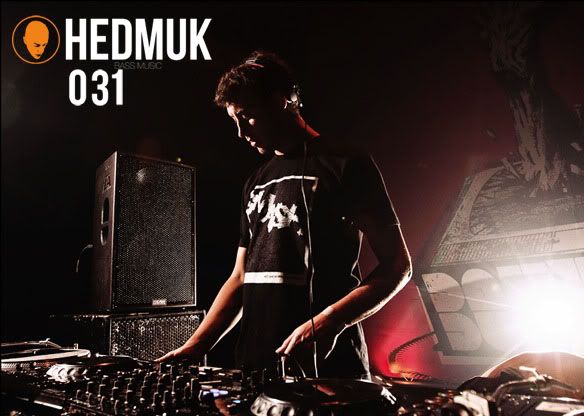
Two of the most consistent labels around,
Black Box and Box Clever have both shot to bag-on-sight status over the last few years. With a wide-ranging and dedicated fanbase, both Black Box and its junior label (although now it's perhaps more accurate to think of it as a twin), Box Clever, are imbued with that hard-to-pin-down sense of openness and creativity that made dubstep so exciting at its inception. We had label head, and all-round top bloke
DJ Thinking on the phone for one of our longest, and best, interviews to date; and new signee Gantz has contributed a guest mix to match - incidentally making him the first artist to lay down a second mix for
our exclusive series.
Hedmuk: To introduce yourself to anyone who doesn’t know yet, what’s your name, where do you hail from and where are you currently based?
Thinking: Yeah, I can give you a little background if you want? My name’s Diccon, I grew up in Dorset but have lived in Bristol for about fourteen years now. I DJ under the name Thinking and I also work at
Chemical Records, where I’m the head of music retail. I also run a label called
Black Box, and its junior label too, which is called Box Clever. And that’s pretty much what I do with my days now, yeah, I sell vinyl and I also release it on my label.
H: So, selling vinyl essentially (laughs).
T: (Laughs) Yeah, I’d say we’re luckier than most at Chemical because we’re quite big and quite well-insulated so we’re still selling vinyl at the moment; but give it a few more years and I’m sure that will change, unfortunately. But yeah, at the moment I spend my days knee-deep in vinyl, basically.
H: ‘The Life’.
T: (Laughs) Yeah.
H: You say that you've lived in Bristol for the last fourteen years; you can’t talk about dubstep without mentioning Croydon, and then almost immediately afterwards it’s Bristol. And even wider than that, there’s a lot of people from Bristol who say that the city itself has had quite a major influence on their taste in music, or their musical development: is that something you’d go along with?
T: Yeah, well, to be honest with you when I was a kid growing up in Dorset I was a straight drum & bass head in terms of what I used to DJ and stuff, and I was a huge fan of Full Cycle and the ‘Bristol sound’; and when I was at school we used to just about pick up the Full Cycle show on Galaxy on the radio, so I used to tape that in the ‘90s. So yeah, I love Bristol but I kind of moved here by default really: I used to play in a band and the guys that I was in a band with were moving up to Bristol so I moved up with them when I was 18 as I was looking to move out from home, basically.
So I kind of wound up here just, not really by accident, but by default because there was nowhere else I was really going to go at the time. But since then I’ve really put down roots here, it’s a wicked city. It’s a good size, not too big not too small; culturally it’s really interesting, as there’s a massive population of students here so lots of young creative people around. I mean, at the height of University time, students make up nearly 10% of the population; so there’s lots of students around and a lot of people who graduate from here decide to stay on here as well, meaning there’s a big young population here. So things like dance music, underground music and the creative arts are really well represented here.
H: So I imagine you’ve seen, particularly in terms of electronic music, quite major developments through Bristol; would that be something you’d say has influenced you, like you’ve kind of grown with the city as its taken on new strands and made them its own?
T: Yeah possibly, there’s sort of a symbiotic thing in a way; I mean, when I was around 18/19 I was into a lot of music but when it came to DJing my record collection was predominantly D&B and jungle and I’d been buying records like that for maybe 5 or 6 six years before I came up here. Then for a while up here I was still straight drum & bass as well, and then actually I think it was a record shop I started going to - which was a cool little shop in the centre of town which doesn’t exist anymore – where I was buying lots and lots of different kinds of music. I was still making music in a band too, that was more sort of like instrumental jazz-funk stuff and we also started making hip-hop – using the studio equipment to introduce, like, different sounds and stuff. I was into hip-hop a lot about ten years ago, and making hip-hop and playing gigs; and, I don’t know, like I say, my musical taste developed: I was, perhaps along with a couple of other people, the first to latch onto the darker garage and dubstep records that started coming out around ten years ago, and then was one of the first people playing it too. So it was almost like we were pushing it in Bristol rather than, you know, it cropping up in Bristol and us getting into it, if that makes sense?
H: Yeah, that makes sense.
T: But then, the thing is in Bristol it’s such a broad-minded city and people aren’t too narrow-minded or blinkered in terms of what they listen to or what they’re happy to go out and rave to or whatever, so it [dark garage/dubstep] was very quickly accepted in Bristol and you had a lot of people writing music who jumped on it very quickly, and that’s why it kind of grew so big so quickly and why Bristol became so recognised as being an epicentre of dubstep after Croydon and London.
H: Yeah. So, moving more specifically to talking about the labels, what was it that made you want to start a label? Obviously you were very deeply immersed in music as a fan, as well as as a musician and DJ, so was it a case of wanting to start a label and then having to look for artists or the other way round: having these tunes, seeing these tunes there and thinking ‘I want to release them’?
T: Well, where I am now it’s taken quite a long time to get here. I kicked off a label years ago called
Reduction which had a handful of releases on it, and that was like a Wedge and Gatekeeper thing, people like that, and we did an early Hyetal record too.
H: Yeah, I remember the 'Pixel Rainbow Sequence' release.
T: That was kind of self-funded, and anyone will tell you that something that starts out like that, with no real plan, is really difficult to keep momentum with as you’re constantly trying to feed the 'money machine'. It’s a very difficult thing to do without getting some sort of funding and having a very clear plan, clear release schedule and a clear vision – which I didn’t really have at the time; and I learnt lessons, I learnt a lot of lessons from it as to how not to do things
(laughs). But then I started work about four and half years ago at Chemical, just as the dubstep buyer basically, and about a year and half into that the top guys at Chemical - the directors who used to run a drum & bass label back in the day and, back when trance was really big, they had a guy there who used to run a trance label out of Chemical as well - they said 'look, you know, we’ve done it before so why doesn’t one of you run a dubstep label: why don’t we start one up?' So yeah, I thought 'look, I’ve got the funding here and I’ve also got a very good understanding of how to sell records' - you know, what does well and what doesn't - so I was in a great position to be able push a label as Chemical is probably still one of the biggest outlets for dubstep vinyl.
H: Yeah, it’s pretty much Chemical, Red Eye and Juno at the moment, in terms of big online retailers.
T: Yeah exactly, there’s only a handful of big shops and we are, you know, one of the biggest. So yeah, it seemed like a very natural thing to do, especially when you’ve got the financial backing and I had a designer that I could work with just to work on logos and stuff. All the things I do, it’s very easy to plug that into the bigger machine, which is Chemical. But it’s still very much my work, it’s not like there’s loads of other people doing it. Around about that time we were starting it we also had the guy who was the head of the drum & bass buying who started a drum & bass label and then a friend of mine came back to work at Chemical as our label manager, and he was literally in charge of sorting the manufacturing, you know, and taking care of the digital side of things and the contracts and the financial stuff; so we started to have a little empire, if you like, of labels. So yeah, we had like a handful of labels and Black Box just became even bigger and became really successful, so we dropped some of the other labels and just concentrated on that and
Black Acre.
H: So do you think that this sort of security as it were, in particular the financial backing, has allowed you to bring in a lot of brand new artists, and particularly producers from overseas as well? You’ve sort of plucked DJ Madd and the likes of TMSV and more recently Gantz from smaller, localised scenes. Would you say that this security has played quite a major role in allowing you, not necessarily causing you, in allowing you to do that?
T: It’s about taking some chances: on the new artists where I had sort of a gut instinct and I couldn’t be sure whether we were going to create a big profit on the record or not, you know. But if I can at least break even then we’re doing OK; with that stuff that’s what you’ve got to be able to do. But what it did in the first place, it meant we could get a good [first] two releases out in relatively quick succession, which is really important if you’re going to start a new label; particularly over the last three years with such a difficult environment to run a record label in. There's so few sales that you need to be able to set out your stall and say ‘this is what I’m doing’ and, you know, you’re defined by pretty much just the releases you put out. At the end of the day a release is only two tunes so you’ve got to get a bunch of releases under your belt pretty quick to say ‘this is what we do, this is what we sound like’ and give people an impression of you in order to make an impression, to stick in people’s minds. Otherwise it’s very easy to get forgotten about.
So that was what having the financial backing and having a label manager working with me and doing, you know, a lot of the boring legwork for me, enabled us to do in the first place. But then as we go on it has, having that label manager and a bit of financial security, meant we can start looking to do bigger things or, like I say, take chances on people and stuff like that.
In terms of the international roster, it’s completely arbitrary really. The internet has opened up the world through communications. I would have been down my local club chatting to people down there, chatting to local DJs and what new tunes they have on dubplate that they’ve been down to London to have cut or whatever; and that would be the much more sort of local-centric scene, but nowadays there are no barriers: all of my label work with those guys is mostly via email, and sometimes via AIM. It’s just as easy as if someone’s in the next town, or whatever.
H: Yeah, I was going to ask about that; because there is quite a significant proportion of your roster which is overseas producers, and it’s something which, I suppose you’re right in saying, is quite arbitrary because people don't necessarily think of Black Box as a label especially aimed at providing bigger opportunities for overseas producers because actually labels, would you agree, sort of have to be open to it: you don’t tend to get very 'local' labels anymore.
T: No, I don’t think so, no; I mean, not unless you specifically set up to do something like that. think Deep Medi perhaps in the beginning was, with Goth Trad excepted, a lot of London people, and obviously Pev[erelist] with Punch Drunk set out with a specific idea that he was only going to release people from Bristol or people that were based in Bristol or, you know, have some sort of connection. So, like I say, nowadays you can’t really afford to do such things because there’s so much good music out there that there’s just no reason to. I mean, some people I haven’t but I’ve met most of the artists on the label now, pretty much all of them – but say Gantz, obviously he’s a new guy on the label, and I’ve never been to Istanbul: I’ve never met the guy but I sort of became aware of his music and I hit him up for some tunes, he sent me something good and then we released it. It’s as simple as that, you know, because we’ve got the good 'machinery' nowadays, or the sort of processes that we can do certain things better now and more easily; it doesn’t matter that I haven’t met them [the producers] yet, I’m sure they’ll treat me to it soon enough
(laughs).
And I also think it’s nice, you know, people can have a new angle on music; and while I’m very proud of the UK as a sort of hotbed of music and stuff, it can be a bit trend-driven sometimes and I think it can take someone with a slightly different slant on things to connect you with new ideas and, well, to surprise you.
H: I think that’s particularly important for a lot of the overseas artists because, especially with something like dubstep, so much can be attributed to how you experience it in a live setting and that’s something that, for the likes of like Gantz in Istanbul, he won’t have a rave that he can go to every weekend and hear which tunes are going off. So it’s more organic almost.
T: Yeah, it’s just an interpretation which I really appreciate. I mean, more and more when I was starting the label I was really searching around for tunes to feed the label. Like I say, it’s really important to get things going and really push it out and try and make an impression with your idea, but actually when you’re not a known entity you haven’t got access to just any producer you want, it’s quite difficult to sort of define your sound or your label very easily because you’re really having to sort of, not make do because that sounds like you’re signing artists that you’re not happy with, but just having to do your best with tunes, and then as you get bigger you’ve got access to more people and they come to you with their music and you can start defining yourself more easily. Now I’m much more, you know, releasing
exactly the sort of music I want to and I’m able to seek out artists regardless of where they’re from; so like TMSV and Gantz, and LAS from Finland as well: these are all people who really are very much a good representation of the sort of music that I want to be releasing.
H: And the Gantz release is out now, but actually on Box Clever; and it didn’t seem like it was so long after Black Box started that Box Clever also came about…
T: Yeah it was only about sort of 9 or 10 months, I think. Although it was supposed to actually be earlier than that, but we kind of delayed over the summer in the end and started it in like September, two years ago or something like that? We sort of worried when we started Box Clever about whether we were stretching it a bit too far, but luckily I think the whole idea’s fleshed out quite nicely and each label has got its own identity. But I won’t be setting up, like a, White Box or any other sort of Boxes any time soon basically (laughs).
H: (Laughs) Yeah, OK.
T: It didn’t start as an arbitrary thing, but we had these tunes by Synkro that were sort of knocking around, and by TMSV, and I was into these tunes that weren’t quite, at that time, what I considered to be ideal Black Box material - which is often a bit tougher, a bit darker, a bit more techy – and they were a bit more organic, and yeah I just sort of fancied having, well, what it was originally conceived to be, a sort of junior label where we sign the younger artists, give them a release or two to break and then move them up to Black Box. But really it’s become more [than that]: Box Clever’s kind of more of a representation of what I’m really about musically and Black Box is like my effort to run a really great label with music that I love, but is also about being as big as possible and doing, you know, big releases as I want to push the artists and make it more [a label] for the artists themselves, if that makes sense? Like I say, I’m very passionate about everything I sign and I wouldn’t release anything if I didn’t think it was amazing but I'd say that with [Black Box] I just want to push that canon, whereas Box Clever is like my baby: when I DJ out I find myself drawing for the ten inches a lot more, you know, which is sort of interesting.
H: So would you say you have a clear idea in your head of what is suited to each label?
T: There’s a lot of crossover, you know; I’m not going to say 'this can only be on such and such label and that can only be on that'. But sometimes things just work out that way: the TMSV stuff, the collabs that he did with DJ Madd and then with June Miller, we had like three tunes there and a [J:]Kenzo remix and they just had a bit more of a tougher, techy edge to them so, you know, that’s like a Black Box thing, and we have the little XXX imprint which is almost like a way of releasing the stuff which is like cool, DJ tools that can’t quite fit anywhere else. So that was a perfect home for it, but mentally for me it wouldn’t have quite fitted on Box Clever: it was a bit dark and techy and minimal, whereas the Box Clever thing is a bit more of a traditional dubstep sound, a bit more sort of five, six, seven years old; and I'd say that’s my favourite sound in dubstep and that’s kind of what I’m looking to represent with the label in some ways.
H: Yeah, because it was actually through Box Clever, having picked up the first TMSV release, that we were sort of introduced to Black Box; because I’d heard the ‘Someone’ remix but, I don’t know, it’s strange how for us, and I imagine other people too, Black Box seems to have grown outward from Box Clever almost.
T: Yeah totally, I do think they’re quite distinct entities in a way and certain artists can work on both and that’s cool; but yeah for me, and especially sort of moving forward from the end of this year onwards, they’re definitely different labels with different identities.
H: And the other thing, even between both Black Box and Box Clever, you’ve now got quite an extensive back-catalogue but the roster seems to still be relatively small, would you say?
T: Yeah we’ve got our core team, if you like, of people that we work with; you know, Madd for Black Box is probably the single artist we’ve put the most music out with, and TMSV has had, what, like three Box Clever releases now, and a couple of things on XXX as well? And Lurka has had quite a big impact as well. These are just people that we've built up a relationship with early on, and to me their music works really nicely for me and it suits the label that they’re on so it’s really good. I love to work with artists on a repeat basis because, you know, it looks good for both artist and label: it shows that we’ve got a good relationship going. Like what I was saying about labels only defining ourselves by the music that we release; if you’ve got someone and you really love their music and you love working with them, then you want to do that because you want to continue defining the label in terms of their sound and also the way they develop. I mean, you look at something like where Lurka’s come from in the last year or two, and he’s gone off in an amazing direction and then, his next record's not actually on Black Box but, you know, we’ll do something next year. TMSV as well, his sound has come on leaps and bounds in the last year or two, so it’s really nice that the label gets to grow with them.
H: Yeah. So do you take on, well A&R is maybe too bland a term for it, but a sort of developmental role at all with the artists?
T: Yeah, there’s always a sort of dialogue of like, you know, ‘what do you want to do next?’ Like with Madd: 'we’ve done some 12s we’ve done an EP, we’ve done another EP, so let’s talk about doing an album because, you know, you’ve got the tunes for it, you’ve got the following for it so let’s do it'. Especially with Black Box, as I see it as the label for the artists, the entire label, the framework, everything that we do is based around the artist because, you know, I’m not an artist myself, I didn’t set the label up to release my own records and actually in the last three or four years I’ve DJed much less than I did in the last ten years; so for me it’s not predominantly about building a career out of it, out of the label, this is about something that provides these guys with something, in an ideal world, that they can make a living out of. If I can sell a few of their records, and they can get some DJ bookings and then they can stop doing their job, or after Uni they don’t have to go and find a job and they can start doing music full time, then that’s kind of like the ideal world for me: just giving somebody the opportunity to do what they want for a living.
H: You mentioned albums, and in things I’ve read with other A&Rs or label owners it quite often comes out that an album, from the perspective of a label owner or whatever, is almost quite a daunting process because it’s seems like something that’s much bigger and harder to manage than a just a 12” single or and EP: did it feel like quite a big step?
T: Well, yes and no. It’s not just that a record or an EP is two or three tunes and now its an album of 10 or twelve so you’re just multiplying the work by that much: it’s exponentially more work in terms of, you know, trying to get people to write about it, PR coverage, radio plugging, everything. Every job becomes so much bigger, and especially for a small label it’s very difficult to make a significant impact with your release in terms of PR and media coverage unless you’ve got really genuinely explosive artists. But it’s not something I'm scared of, I mean we’ve done three albums on Black Box now – Kryptic Minds was the first, and then we’ve done Madd and
Seven – and I don’t have any more concrete plans for albums in the [near] future, but it’s something I’ll look forward to doing. For me, it’s something where you wait until each artist is ready and then you say, you know, ‘shall we do it?’ And then the writing starts and the work at the label end starts, in terms of preparing PR and photos and all stuff for the press and all the logistics of manufacturing and what have you. And, you know, like I say I’ve also got an amazing label manager, Ian, who’s a real wizard when it comes to nailing the industry stuff and the PR stuff and the plugging and stuff; so it’s a lot less scary for me because I’ve got a great team behind me as well.
H: And with this, you release, as well as digitally, pretty much everything on vinyl and you’re happy to do CDs too. You don’t seem to be too bothered about stretching yourself across all formats.
T: I think at the moment you have to do a CD along with vinyl for an album project; I don’t think, you know, from the artist’s point of view, if you say ‘I’ve done my album, and it’s my first album’ or whatever, ‘and here’s my triple vinyl’ you'd sort of always want the CD: you want the whole package, you know, with all the pieces. The sort of thing you can give to your Mum, you know (laughs). So I think at the moment you still need to have that, because it’s the recognised album format, if you like. I do think there’ll come a time when people maybe don’t do it anymore though.
H: Is it fair to say that you do value vinyl as a format, but not just particularly because of sentiment or that it’s the format that you grew up with but because it’s also now, in this competitive, difficult economic climate, it’s almost symbolic of saying ‘this is quality music because I didn’t mind paying to get it pressed’?
T: Yeah, absolutely: the commitment is absolute, it’ll be a very very sad day when we stop releasing records, and hopefully it’ll be a long time from now. To be honest with you, I’ve been buying records for nearly twenty years and it just would seem weird not to release on a record. I have no sort of snobbery about, you know, vinyl over digital or CDs or whatever; I have no issue with anyone who wants to DJ with whatever format they use, but for me I don’t really get it: I’ve never been a digital DJ, I don’t really enjoy it as much. It’s just a simple fact of releasing a record really, I wouldn’t think of doing it any other way. But you know, with the
Biome EP for example we did an extra track on the digital and it seemed like a nice thing to do, it’s a shame you can’t release everything you want on vinyl, but there’s financial limitations. I think it’s nice to do extra stuff here and there, but at the moment the vinyl definitely comes first, and everything else is a consideration afterwards.
H: Would you say that working at Chemical Records has also encouraged you to keep backing vinyl, because obviously you spend pretty much every day, as it were, moving boxes of it around and being reminded perhaps of how important it still is?
T: You know, maybe it’s a bit of a double-edged sword to be honest with you: working in that environment you’re surrounded by vinyl, and obviously I'm handling my own stock and I imagine a lot of people perhaps don’t get to see their 500 or 1000 records turn up - if you’ve got a label that’s working with a distributor, then you’ll get a TP in the post and they’ll send you, like, a box or whatever of thirty copies or so, but you won’t ever see the whole mountain of vinyl when it arrives - and you get a bit ‘oh my God, how am I going to sell all these?’ Sometimes, you know, I just shit myself (laughs) I think, ‘fuck, we’ve just pressed so many records how are we going to sell all these?’ But then you send half of them to your distro and you can calm down a bit.
But also, yeah, I walk around one of our warehouses at work and its got a hundred and fifty thousand records in it, and to be honest it’s easy to get blasé about it: you order, you know, a few hundred copies of a big album that’s coming in, and there’s hundreds there that’ll go easy. I do perhaps become a little more blasé about vinyl but I’m still here doing it and I still love buying records, and I still love cutting dubplates. Records still give me a lot of joy, so yeah it sort of keeps the passion alive in me in some ways; like, my label manager runs Black Acre and yesterday we got the TPs in for
the new record that’s coming out in December, and we were just out in the shop checking them on the monitors out there, nice and loud, and we were just loving it: the tune sounded amazing on vinyl and we were just shouting and screaming and slapping the desk about how good it sounds…
H: And you get to do all this as work as well (laughs).
T: (Laughs) Yeah, we both said ‘we knew this was going to sound amazing on vinyl!’ It sounds like old Wu-Tang beats or something: it’s amazing. So yeah, the passion’s still there: a lot of times you listen to the digital masters when they come back from
Masterpiece, and you’ll be like ‘you know what, these tunes are going to sound amazing off wax’ and then two weeks later you get your TPs and put them on loud and you’re like, ‘yeah I was right, it sounds amazing’. So yeah: it’s still number one for me.
H: You’ve also started doing things like the Black Box boat party at Outlook this summer and there’s been Chemical Records stages and things like that before; is this something that you can see yourself getting more and more involved in? Because, as you say, you want your artists to be getting lots of bookings so is doing these label showcases live something you can see yourself doing a lot more of?
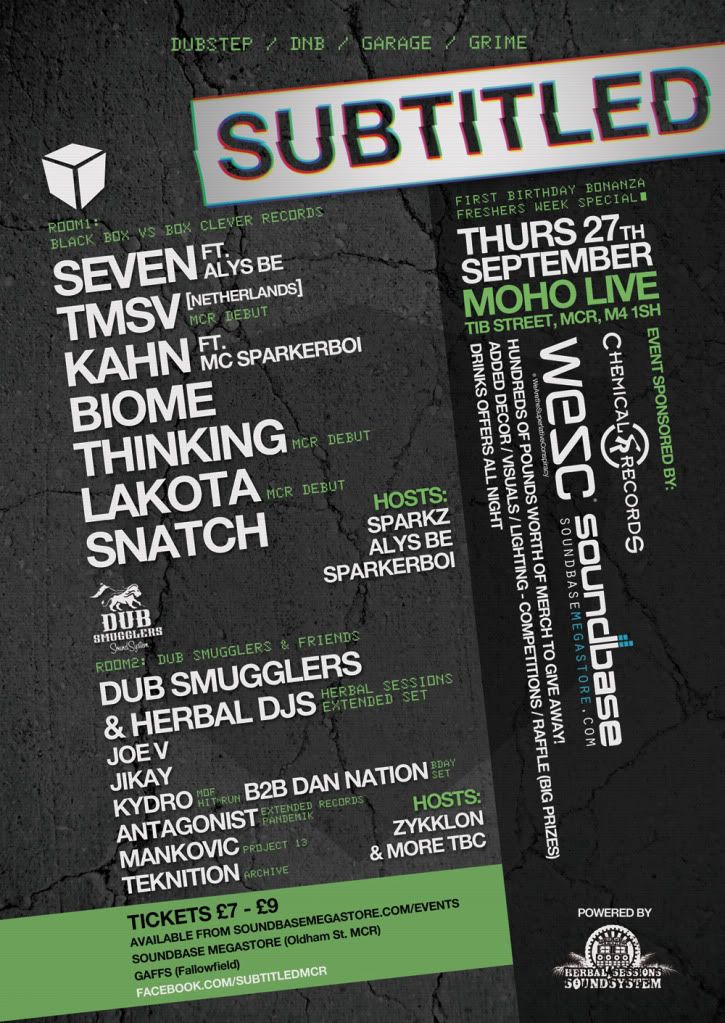
T: Yeah I’d love to; I mean last year we got involved with Outlook at a very late juncture, so we did a Black Box boat party and the little Chemical thing too with the Dub Studio guys, like cutting dubplates and stuff; but this year we were on board right from the beginning and we had a massive stage at Outlook and another boat, which was great. I’d love to do more, we’ve done a few label nights, like we did a Stink Like Sock last November which was amazing and we also did the night in Manchester which was cool, and we’ve done sort of one or two other label nights; but yeah, I’d love to do more. It’s something I’d do in Bristol if I had the time and energy for it, you know, and the stack of cash to risk on it, as promoting’s a tricky game. But yeah, I’d actually love to do much more label showcasing because I think it’s kind of cool for the artists to get together and play together and stuff, and it’s always really good energy when everyone’s backstage and that, and having a laugh. But you know what, it’s not actually something that many people have approached me for; there was a couple things that were planned and then fell through but yeah, I’m sort of sat waiting for more people to ring me up and say, you know, ‘can we book X, Y and Z artist’. And we do try and bring something big to it, I mean last year for the Stink Like Box we did we made an exclusive t-shirt and we gave away fifty on the night and stuff like that, and I always bring a box of records to chuck around and stuff like that, and stickers and what have you –
H: (Laughs) Talk about being blasé about vinyl…
T: (Laughs) Yeah! But then that’s the cool thing: because we manufacture everything in-house, the actual [individual] units don’t cost us loads – they’re not six pounds a record to me, they’re a bit cheaper than that – so it’s an acceptable cost if we want to get ten copies of a record and say ‘you know what, we’ll just give these away today’, because it’s cool, and everyone likes to get free stuff: I know I love it! (laughs)
H: And that’s something else actually that’s very much associated with Black Box and Box Clever is the t-shirts and the record label artwork and things like that, it has got a very striking look: and that all seems to add to the feeling of the two being labels that you can trust, because you're given an idea about what each record’s going to sound like and you know it looks good as well. Is the aesthetic something that’s quite important to you as well?
T: Yeah, it really is. Although when it comes to doing a sleeve or something like that I start sweating almost immediately because it’s something I really struggle with: visually I know what I like, and I know what I like when I see it, but if a designer says ‘what do you want it to look like?’ My mind goes completely blank and I’m like, ‘er, try this, try this, try this’ and I let them go away and then come back, and it’s useless and I go ‘a bit more like this or this’. You know, I’ve sent a few designers completely mad just trying to do what I want. But eventually we get there and we produce something wicked. So yeah, I do have clear ideas about how things should look but they sometimes get a bit fraught between me and designers as we try and establish what it is I want things to look like. I was lucky that we used to have an in-house designer at Chemical, called Jamie, who designed the original Black Box logo and a few t-shirts and stuff, and he did a great job. We’ve got a couple of in-house designers at Chemical now who’ve also done more recent work, like the sort of Illuminati hand design was from one of our in-house printers. But yeah, like I say, we don’t always do big sleeves but when we do it’s got to be something which I’m really into because, the same with the music, that’s what defines the label. If I’m not going to stand up and say 'the label’s going to sound and look like this' then we’ll lose direction, and when you lose direction you can lose the support of your fanbase I guess.
H: Yeah, absolutely. So with all of this in mind, what can we expect from Black Box and Box Clever, as far as it is in your mind, as we move towards and into next year?
T: Erm, to be honest with you, I don’t know, I don’t know at the moment. I mean, in terms of specific releases most of the time you could ask me what we're doing and if I was actually going to tell you all my secrets, I’d tell you what’s going to happen for the next six months: we usually work about six months ahead of ourselves in terms of sort of planned-out releases, we obviously won’t have it nailed down to ‘this is exactly when this comes out’ but we’ll have a pretty good picture month by month of what we’re going to be doing. It's the first time almost in three years where actually [I don't know] - aside from the
DJ Madd record in December, which is the one with the Distance remix; and an EP which is going to be quite a big deal, which is probably going to be out in February (and for which I can’t release any names yet, but it’s going to have quite a big famous MC on it and it’s an artist I’ve done one record with before), that’s all I know at the moment really. There’s nothing signed to Box Clever, I’d like to get a new LAS record and I’d like to get a new TMSV record, and there’s a couple of other people I’d like to do some stuff with that I’m sort of fishing around for at the moment.
But I’ve got some big plans: I’d like to do a sort of big compilation series with, like, lots of the artists that I’ve worked with before on Black Box, and maybe a few people who have been supporting the label, or friends of mine from the dubstep scene and maybe a few more sort of like ‘godfather’ type people from the scene; and I’m just sort of trying to sort of shake a project of that sort of thing together. But yeah, in terms of specific future plans I haven’t got much going at the moment; but between me and and my label manager Ian, we want to take Black Box in particular somewhere a bit bigger. We’re going to be aiming more at grander, bigger scale releases, looking to make more impact on specialist radio like Radio 1 and 1Xtra, and Kiss and make more of an impact in terms of media attention from blogs and magazines and the sort of bigger 'music corp'. So we’re looking to make, obviously without deviating from our, sort of, musical mission, we’re looking to make more of an impact basically. We’ve got a really good brand, and also I feel like we’ve got a really loyal customer base so we just want to take that and expand on it exponentially: try and mushroom that into something a bit bigger really. Like I say, we want to give our artists platforms from which to push upwards from; we’ve reached a certain size now and it’s just about trying to make it that bit bigger.
H: Yeah, you don’t want to risk plateauing off.
T: To be honest mate, yeah, that is a real risk. Trying to pull off big releases is actually quite difficult and takes quite a lot of balls, so you need to stick your neck out sometimes and say ‘we’re going to do this and try and do something that’s perhaps a bit big for us and try and get away with it, or see if we can actually achieve it’. And yeah, I’m at one of those stages where we’ve reached a sort of plateau, if you like, in terms of where we are and we just need to pull everything together and pull all our assets together and break on through to the next level, and take on some bigger labels. Take a few chances perhaps, and see what happens.
H: Absolutely. I’m sure you don’t want to answer this question, but I’m also sure there’s plenty of people wanting to know if anyone can expect to hear any music from DJ Thinking at any point soon?
T: (Laughs) Yeah people ask me once every while ‘why don’t you write some beats?’ And, you know, I grew up as a musician, was a music scholar at school and played lots of instruments like violin, piano, bass and percussion and all sorts and, like I say, I used to play in bands and when I moved to Bristol we made beats in the studio and then played them live with MPCs and live instruments. But it’s been a long time since I sat down at Logic and wrote a beat: I often threaten to do it, and then never quite follow through. Mainly because, to be honest with you, I used to quite enjoy writing with an MPC because it’s quite sort of labour intensive to get anything out of it and you need to really concentrate on what you’re doing just to sample a snare or time-stretch one sample or whatever, and I genuinely don’t find the process of sitting down in front of a computer using mouse clicks very intuitive. I mean, I could get a MIDI controller or Maschine or whatever and do it like that, but I just don’t find the actual process, like, personally very fulfilling; because, like I say, I used to make music with instruments which is a different thing. I do often have ideas where I think 'I should do this', and every once in a while I sort of think maybe I’ll sit down with another producer and do the kind of, you know, a bit like Goldie or someone like that where you have someone else do your production for you and you just give the ideas. But you know what, I figure if I was really inclined to do it I would have sat down and done it; so if I do really want to do it, I’m not in a rush to make it happen. Like Untold, he was about my age and took a long time before he got round to releasing any music, so I’m not in a rush to do it.
H: Yeah, so more of a case of having different fish to fry rather than bigger ones.
T: Yeah, I’m just kind of enjoying running the labels which is [still] a new thing for me; I’m learning loads through doing it and I’m enjoying just working on behalf of other artists and doing it for them. And whilst I’m DJing a bit more nowadays, as a result of the label perhaps, I’m not DJing nearly as much as I used to and I’m enjoying focussing on trying to sort other people out, like get them a gig or get their record out or whatever and make things happen for them. Because there are different challenges that come from that. Music’s a big part of my life and I think about it all the time, but at the moment I’m not too worried about making the beats.
H: So I guess we can sort of wrap it up there: if there’s anything you want to mention, any of the forthcomings or any new artists joining or anything specific that you want to put the word out on…
Tracklist:
Wen - Commotion (Dub)
TMSV & Beezy - Crashing (Dub)
LAS - Mental Judgement VIP (Dub)
Kaiju - Drowning Jmnast (Dub)
Gantz - Enso (Dub)
Gantz - Wintershine Music (Forthcoming Aquatic Lab)
Congi - Cult (Gantz Remix) (Dub)
Sleeper - Zodiac (Chestplate)
DJ Madd - The Life You Chose (Distance Remix) (Forthcoming Black Box)
Gantz - No Faith (Box Clever)
TMSV - Stress (Box Clever)
LAS - Rispekta (Dub)
Gantz - Catalyst (Box Clever)
Gantz & Stiver - Ninety (Dub)
Preacha.